- Following 1K
- Followers 13.4K
- Engagement 23.43%
- Avg likes 3.6K
- Avg comments 39
About Simone Zoccante
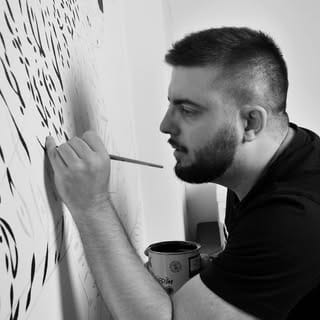
Simone Zoccante (@zoctheartist) is an Artist creator on Instagram, also filed under Art & DIY. The account has 13,396 followers and 449 published posts. Recent posts average 3,628 likes and 39 comments, an engagement rate of 23.43%.
With 13.4K followers, Simone Zoccante is a micro creator by the common 10,000 to 100,000 definition. Simone Zoccante follows 1,025 accounts, so the audience is roughly 13 times the size of the list followed. Simone Zoccante uses an Instagram professional account. Flinque files Simone Zoccante under Artist, with Art & DIY as a secondary category.
The Instagram bio for Simone Zoccante runs to 11 words across 4 lines. Emoji sit alongside the words. The latest activity Flinque has on record for Simone Zoccante dates from January 2026.
Story Highlights
Unlocking shows the title and cover image of every story highlight this creator keeps pinned to the profile.
449 Posts
Of the 10 most recent posts shown for Simone Zoccante, 9 are carousels and 1 is a video. That mix leans toward carousels. 449 published posts give Simone Zoccante a moderate archive on Instagram. Against the audience, that is roughly 30 followers for each post published. Simone Zoccante also keeps 27 story highlights on the profile. All 10 carry captions, averaging 228 words each. The captions are written mainly in English. Words that recur across them include work, last, might, illustrations and still. The captions tag #zoctheartist, #wildlifeillustrator, #vector, #adobeillustrator and #paleoartist.
Last fall I realized these #vector fish designs for a private customer.
These are some of the most common fish species of the North American Atlantic coast, you might have recognized some of them like the iconic Yellowfin Tuna, the Dorado or the Flying fish.
Lately I realized some projects using #adobeillustrator. Illustrator was the first Adobe Suite program that I learned to use in my very first phase of my career. I used to find it very handy as I could create my artworks using only the mouse. At that time I used it for everything. I even used it to create the majority of the illustrations in my first book "Artifici Naturali" back in 2021.
Now I definitely use more Photoshop, and I prefer it cause I find it more versatile. But I still enjoy the fresh and clean look that Illustrator gives to my creations, so I'm glad to go back at it from time to time.
For the freshly published Megantereon cultridens brain, I've been commissioned to realize a hypothetical cooperative scene between two Megantereon. The prey we chose is a Eucladoceros ctenoides stag, a common prey item in the Mediterranean Europe during the Plio-Pleistocene border.
We were not convinced that a truly lion-like cooperative hunting was plausible also for Megantereon, there is still no evidence of that behaviour and the frontal lobe expansion (Meli et al., 2026) seems to be linked more to somatosensory and prey manipulation skills, rather than to sociality.
So the scene is more likely the result of an occasional teamwork, maybe due to a brother coalition, like the ones reported in Panthera onca (Jędrzejewski et al., 2021), Puma concolor (Elbroch, 2017) and Acinonyx jubatus (Caro & Collins, 1986).
STORYTELLING
I also put a bit of storytelling in the scene and this can be seen in some details.
What I imagined is a scare-and-tackle strategy where one of the two cats pushes the prey towards the other, that takes the stag and subdues it.
You can see the dynamic in the fact that both the stag and the Megantereon behind have wet legs and feet (probably they crossed a streek during chase) while the other Megantereon is totally dry, since it waited chrouched among ferns.
But I made this strategy clumsy, as we see in non social gregarious felids (like cheetahs and cougars). The Megantereon behind tried to take the stag down by himself, but failed. If you look closely, Eucladoceros shows some wounds on the hindquarters, the result of the failed attack by the chasing dirk-toothed cat.
At the beginning of this year I had the pleasure and honour to work on a paper (led by and ) that investigates the neuroanatomy and the consequent ethological insights of Sabertooth cat Megantereon cultridens 🐆
This results was possibile with a deep study of the endocast of this felid, a study carried out on three different specimen from Spain, Italy and France.
So what was Megantereon's brain like?
From the endocast we can infer that the brain was roughly pear-shaped with two particularly developed areas, the frontal lobe and the cerebellum. These two areas are linked to motor and somatosensory specializations (like the sense of touch) and with spatial coordination.
A particularly keen sense of touch could be linked to the hunting strategy of Megantereon, that had to precisely manipulate the prey, in order to give a proper "dirk-tooth throat bite".
A good 3d spatial coordination instead, is often seen in felids that live in closed habitat or that have good climbing abilities. We see similarly enlarged cerebella also in the jaguar and the tiger (forest felids), the clouded leopard, the leopard (scansorial felids) and in the cheetah (that has to dodge obstacles while running at high speed).
The cortical folding pattern of the occipital lobe and the absence of gyrus intersylvius suggest also that Megantereon had a more reduced auditory cortex and a more expanded visual vortex. It is possible that this cat relied more on sight than on hearing.
Know more about this research in the freshly published paper on.
I really want to thank the team (in particular Saverio) to let me be a part of this research 🐆 I really enjoyed working with you all 🙏🥳
Last year I worked on a really nice project.
I realized some anatomical tables for a book published by the Quarto group (Chartwell books) for the series INSIDE OUT.
I was asked to create 8 detailed illustrations that depicted a Humpback whale inner anatomy. These illustrations are the core part of the book, and through the die-cuts method would allow the reader to "slice" the whale to discover its crazy anatomy.
It was such a fun project!
The book is available now in all physical and online bookshops.
I hope you'll enjoy it 🐋
You might have heard that there's a new Spinosaurus in town! Spinosaurus mirabilis made it's grand entrance in the paleontology world at the beginning of this year, with a research led by Paul Sereno and Daniel Vidal.
It's most striking feature, the blade-like nasal crest, made us wonder and ponder once again on how peculiar could be display structures on theropods heads.
I had the chance to talk about this new discovery on magazine, in a special column included in April's issue. I also provided a brand new reconstruction made under the supervision of Spinosaurus researcher. It has been hard to imagine an iconic and functional design that wasn't similar to the official version made by colleague Dani Navarro, but I'm pretty satisfied with the result.
I also took the chance to realize a comparative Spinosaurus aegyptiacus reconstruction, taking the design from my last Spinosaurus painting (The fisher's bay) that you might have seen in Mesozoic Art II.
It was so refreshing to work on such cool subjects and I'm gratefully to the magazine's team that gave me this opportunity 🙏
I hope you guys enjoy the article and my new reconstructions 😊
It's a wrap! This is the last post of this focus on the Adriatic sea's cetaceans.
In this last post you can find a summary of the project developed in collaboration with and.
The goal of this initiative was to raise the awareness of the general public of the urban area of Trieste (Italy) about the cetacean species that live in the gulf and the sea near the city.
Cetaceans are quite popular and beloved animals, yet some aspects of their biology and or some species in total that are still obscure to the general public.
I was commissioned to handle the illustrated project, that included the illustrations of the 10 selected species (that you might have seen in the previous episodes of this series), and two full tables: a comparative one (slide 2 and 3) and a whale watching table with, silhouettes, blows and breaching behaviours (slides 4 and 5).
The illustrated products were printed on field guide-like posters and panels for the stand in the Barcolana exhibition last October.
The poster was distributed to the audience in order to let them participate in a citizen science whale monitoring project in the Gulf of Trieste.
I hope you enjoyed this focus and I really thank the organizers for involving me in this project, I hope we will work together soon!
Is this the end with cetaceans related projects? Well definitely no 🐋 soon I'll show you some more 👀
Rorquals are some of the largest animals on our planet, the Fin whale here (Balaenoptera physalus) for example, can measure 22 meters (27 m for largest individuals) and weigh 45 tonnes (80 t for largest individuals). Yet they don't have a bulky structure like an elephant would, they have an elegant and elongated figure, more similar to a bullet train or a race car than to a "sea tank".
They're somehow designed for hydrodynamics.
As a matter of fact, rorquals can be rather speedy, and the Fin whale is one of the fastes, reaching a maximum speed of 46 km/h and, thanks to endurance capabilities, they can sustain speeds of around 40 km/h. Considering the size, it's quite a remarkable score. No wonder fin whales are sometimes called the "greyhound of the seas".
Another remarkable feature of fin whales is that they're one of the few vertebrates to have asymmetrical colouration on the sagittal plane. The left side of their heads is dark grey while the right side is light grey with a complex pattern of multiple darker shades, that can vary between individuals. It is yet unknown the reason for this strange colour pattern, it may have implications in countershading during feeding (Tershy & Wiley, 1992), but there is no consensus about it.
The Fin whale is present in the Mediterranean sea, where it is listed as Endangered by the IUCN. It is possible that the Mediterranean sub-population has links with the Atlantic one via straight of Gibraltar, some researchers think that the Mediterranean populations is composed by migrant individuals from the Atlantic, the topic is still debated. The major threats for this species are pollution, ingestion of microplastics and ship collisions.
In the Adriatic sea, the Fin whale is an occasional visitor, especially in the southern parts where the sea is deeper, but they don't disdain shallower waters (the Gulf of Trieste and Croatians bays) where they sometimes find repair.
Continues in the comment section.
Che cosa del passato ti attira così tanto? Parliamone nei commenti 🦤
Tra l'altro la puntata di Geo in cui sono stato ospite è disponibile su, così se te la sei persa la puoi recuperare.
#zoctheartist #paleoartist #paleoart #geo #rai3
John Lanzendorf-National Geographic Paleoart Prize, 2D art winner (2025).
Morrison Formation (Wyoming/Colorado), Late Jurassic. After a large forest fire the landscape appears gloomy and desolate. Trees stand bare in the ashy sunlight as a memory of a bygone lush and green environment.
The ground is covered by charred vegetation and the burned corpses of unlucky dinosaurs. The apocalyptic silence is broken by the heavy steps of a huge Stegosaurus ungulatus. The large tyreophoran was wounded by the fire but survived and has not lost its manacing potential.
The lack of vegetation might not be a problem for Stegosaurus, who doesn't need to hide that much, but for a group of Brachiosaurus hatchlings this is a major problem.
Not only they don't have food, but they also are defenseless without a place to hide.
This is the reason why they chose to join Stegosaurus by following it. The baby sauropods understood that Stegosaurus was not a direct threat and so they decided to take advantage of the protection (the aegis) of the large herbivore.
And considering the Morrison habitat they did a smart choice, a Torvosaurus is patrolling the area in search for a snack and might be a great danger for the little Brachiosaurs.
This art won the prestigious John Lanzendorf-National Geographic Paleoart Prize this year at the 85th annual congress in Birmingham. It was a great honor to have achieved such a milestone.
Big thanks to all the SVP staff for this great honour and for an amazing congress.
This painting was also involved in another large project, soon I'll show you more.
#zoctheartist #artist #wildlifeillustrator #wildlifeartist #wildlifeillustration
Enter the world of ANIMAL ART at 360°.
I've always been passionate about animals and nature, and since I was a child I've always drawn it.
But I've never took it as "just a hobby". I always knew that one day it would have become my profession.
3 years ago I accomplished this vision and, now being a Natural History Illustrator is actually what I do for living.
It took me almost 20 years to acquire the expertise necessary to go professional in this sector.
In this large amount of time I studied the main subject of my work (animals and natural science), and all the tools of my profession (art, illustration and design).
Generally speaking in the illustration and visual art market animals are treated as a subjects equal to a pile of others, as a mere object functional to a certain narration, most of the times humanized or worse, with factual mistakes in proportions, anatomy, colours and behaviours.
This happens even in illustrated products where the aforementioned factors should matter.
My professional figure is unique inside the illustration and visual art sector.
If you ask me to collaborate together you will:
- talk with a person who has a deep rooted knowledge in animals, their anatomy, their evolution and behaviors;
- work with an expert of natural illustration and animal artistic representation that can move across various styles and visual languages, according to the final product's identity or designed audience;
- receive accurate and scientific-driven, yet catchy and compelling representations of animals.
What I love the most about my work is that there are always new ways to know and to show the wonders of the natural world to an ever-increasing audience.
One of the best and most stimulating ways that I found to do it is to work on concrete projects, with partners that have nature-oriented or nature-inspired themes as a core of their projects.
So if you're working on some projects and you think that my illustrations can be the secret ingredient to your successful strategy, don't hesitate to contact me on my email:
I can't wait to be inspired by your ideas 😊
#zoctheartist #wildlifeillustrator
Simone Zoccante's engagement
Simone Zoccante's engagement rate on Instagram is 23.43%, over 6%, more than 6 likes and comments per 100 followers. On a typical post that comes to about 1 like or comment for every 4 followers. Likes outnumber comments by roughly 93 to 1, with 3,628 likes and 39 comments on an average post, so most reactions are taps rather than replies.
Engagement rate
23.43%
- Avg likes
- 3.6K
- Avg comments
- 39
- Interactions : followers
- 1 : 4
Lookalike Creators
A free account lists creators whose audiences behave like this one, ready to shortlist and compare side by side.
Age & Gender
Unlocking shows how this audience splits across age bands and gender, charted from follower data.
Audience Location
Unlocking reveals the countries and cities where the most active followers of this account are concentrated.
Primary Language
Unlocking shows the languages this audience uses most in comments, interactions and the content it consumes.
Audience Interests
Unlocking lists the topics and categories this audience follows and engages with most often across the platform.
Authenticity
Unlocking scores how genuine the audience is, flagging fake, inactive or bot followers found in engagement patterns.
Audience Quality Score
Unlocking gives one overall audience quality score combining authenticity, engagement, follower activity and audience relevance.
Brand Affinity
Unlocking names the brands this audience already follows, mentions or engages with across social platforms.
Content Strategy
Unlocking breaks down the content pillars, tone and visual style this creator uses, and which formats perform best.
Commercial Insights
Unlocking shows collaboration types, an estimated pricing tier and a brand safety risk read for sponsored campaigns.
Industry Fit
Unlocking rates how well this creator and audience align with specific industry verticals and brand categories.
Research Simone Zoccante further
Flinque ranks Instagram creators in Art & DIY, categories Simone Zoccante is filed under, and its free tools measure the same figures for any public account.
Related rankings
Frequently asked questions
These answers about Simone Zoccante are generated from the Instagram profile data Flinque holds for the account.
Who is Simone Zoccante?
Simone Zoccante (@zoctheartist) is an Artist creator on Instagram, also filed under Art & DIY. Simone Zoccante uses an Instagram professional account. The Instagram bio for Simone Zoccante runs to 11 words across 4 lines.
How many followers does Simone Zoccante have?
Simone Zoccante has 13,396 followers on Instagram (13.4K). Simone Zoccante follows 1,025 accounts, so the audience is roughly 13 times the size of the list followed. 449 published posts give Simone Zoccante a moderate archive on Instagram.
What is Simone Zoccante's engagement rate?
Simone Zoccante's engagement rate on Instagram is 23.43%, over 6%, more than 6 likes and comments per 100 followers. On a typical post that comes to about 1 like or comment for every 4 followers. Likes outnumber comments by roughly 93 to 1, with 3,628 likes and 39 comments on an average post, so most reactions are taps rather than replies.
What does Simone Zoccante post about on Instagram?
Flinque files Simone Zoccante under Artist, with Art & DIY as a secondary category. Of the 10 most recent posts shown for Simone Zoccante, 9 are carousels and 1 is a video. The 10 recent Instagram captions Flinque holds for Simone Zoccante repeatedly use the words work, last, might, illustrations and still. Simone Zoccante's captions carry hashtags such as #zoctheartist, #wildlifeillustrator and #vector. Simone Zoccante writes those captions mainly in English. Simone Zoccante keeps 27 story highlights, which open with a free Flinque account.
How do I contact Simone Zoccante for a collaboration?
Simone Zoccante's contact details are not published on Flinque's public profile. The Instagram bio links to 1 external site, and a free Flinque account opens that link. Brands with a free Flinque account can shortlist Simone Zoccante and use Flinque's outreach tools wherever a contact route is on file.
Links
Simone Zoccante's own Instagram profile is the one outbound link Flinque publishes for the account, and the bio link opens after signing up.
Public profile data sourced from Instagram. Flinque is not affiliated with Simone Zoccante.