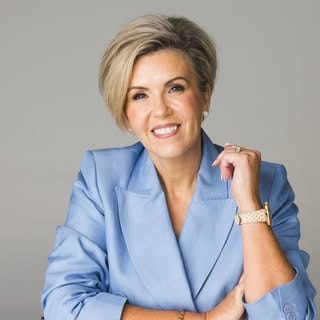
- Following 7.4K
- Followers 15.3K
- Engagement 0.23%
- Avg likes 29
- Avg comments 12
About Jane Anderson
Jane Anderson (@the_jane_anderson_) is a Motivational speaker creator on Instagram, also filed under Education & Career and Business & Utility Services. The account has 15,257 followers and 2,322 published posts. Recent posts average 29 likes and 12 comments, an engagement rate of 0.23%.
With 15.3K followers, Jane Anderson is a micro creator by the common 10,000 to 100,000 definition. Jane Anderson follows 7,447 accounts, so the audience is roughly 2 times the size of the list followed. Jane Anderson carries Instagram's verified badge and is set up as an Instagram business account. Flinque files Jane Anderson under 3 categories, led by Motivational speaker and followed by Education & Career and Business & Utility Services.
The Instagram bio for Jane Anderson runs to 18 words. The latest activity Flinque has on record for Jane Anderson dates from May 2026.
Story Highlights
Unlocking shows the title and cover image of every story highlight this creator keeps pinned to the profile.
2,322 Posts
Of the 10 most recent posts shown for Jane Anderson, 7 are videos, 2 are single images and 1 is a carousel. That mix leans toward videos. With 2,322 posts published, Jane Anderson's archive runs well past the 2,000 mark. Against the audience, that is roughly 6.6 followers for each post published. Jane Anderson also keeps 18 story highlights on the profile. All 10 carry captions, averaging 276 words each. The captions are written mainly in English. Words that recur across them include thoughtleadership, it's, clients, expertpositioning and authoritybuilding. The captions tag #thoughtleadership, #b2bexperts, #b2bconsulting, #expertpositioning and #authoritybuilding.
The client gets value, and then there's nowhere obvious to go next. So they don't go anywhere.
The shift is this: design your offers as a journey, not a menu.
There are a few layers you could consider for your practice.
First, a low-risk entry point. Something priced and structured so the decision is easy, a workshop, a half-day intensive, a short program. It should deliver real value and make the next step feel obvious, not something they have to hunt for.
Second, your signature offer. This is the primary engagement that does your core work and gets your best results. The entry point should lead here naturally. You shouldn't have to hard sell it, the first experience should create the pull.
Third, an ongoing relationship. Once clients experience your best work, the question becomes: how do they stay? A retainer, an advisory arrangement, a membership. This is what turns a consulting practice into a sustainable business, rather than a constant cycle of finding the next client.
When your offers are structured as a journey, clients don't leave, they move forward. And your business stops feeling like a sprint and starts feeling like a practice.
If you want to work on your offer structure in a room with other consultants who are serious about growth, I have just two spots left for the Influence Lab on the 10th of June here in Brisbane.
It's a hands-on day where we get into exactly this, your offers, your positioning, and the pathway that makes growth feel inevitable rather than exhausting.
DM me the word INFLUENCE and I'll send you the details.
#ThoughtLeadership #B2BExperts #B2BConsulting #ExpertPositioning #AuthorityBuilding
Thank you Carol Humber from for sponsoring the Women Supporting Women Award. Congratulations to all the other winners and finalists, it was a reminder how incredible women in business are and what they can achieve!
So grateful to serve the amazing women in B2B Advisory, Consulting and Thought Leadership. 🙏
The privilege of supporting incredible female founders, thought leaders, and experts to step into their authority, grow thriving businesses, and create meaningful impact in their industries. To be recognised alongside so many inspiring leaders is something I’m deeply grateful for.
Success is never built alone, so thank you for joining me on this journey along with my clients, team, peers, and every woman who has trusted me to be part of her business growth. Your support, belief, and ambition continue to inspire me every single day.
I’m so excited for the Beam Awards night in Melbourne and cannot wait to celebrate alongside so many exceptional female business leaders.
#BeamAwards2026 #BusinessLeaderOfTheYear #WomenInBusiness #ThoughtLeadership #Leadership
And then at the end, you said "so… what do you think?"
Then it all went a bit vague. They said they'd have a think. You said no rush. And now it's been two weeks and you're not sure what's happening.
Closing a sale doesn't have to feel like pressure. But it does require clarity, and most consultants skip the closing moment because they're afraid of what it might say about them.
So there’s a little mindset reframe that might be helpful..: closing is not a pressure tactic. It's a clarity move. It's you respecting the other person enough to help them make a decision.
Because the alternative (vagueness, "let's stay in touch," "no rush at all") isn't kindness. It's avoidance. And it leaves your prospect in limbo too.
Three ways to close naturally and confidently.
The summary close. At the end of the conversation, briefly reflect back what you've heard: "So it sounds like the core challenge is X, and what you need is Y...is that right?"
When they confirm, the close becomes easy: "I think we can absolutely do that. Shall we talk about what getting started looks like?"
The invitation. "Based on our conversation, I think this would be a really good fit. I'd love to work with you on this. Are you at the stage where you’re ready to start?" Simple. Direct. Not pushy, because it gives them a clear yes or no.
The next step. If they're not ready to commit, don't leave without a specific next action. "Let's set up a follow-up call for next Thursday. Does that work?"
A date in the diary is not a close, but it keeps momentum. Vagueness kills deals.
Closing well is an act of confidence. And confidence, in sales, is contagious.
After your next discovery call, practise ending with a direct invitation rather than an open question. Notice what changes.
If you need help with getting better at closing your sales meetings DM me and let’s jump on a call to see if I can help!
#ThoughtLeadership #B2BExperts #B2BConsulting #ExpertPositioning #AuthorityBuilding
And they're not wrong. You can't.
But most consultants hire in the wrong order. They bring someone on to take tasks off their plate before they've built the engine that pays for that person. And then they wonder why growth has stalled and the wage bill feels like a weight around their ankles.
The problem isn't the help. It's the sequence.
Here's the framework I use with clients, and it has three stages:
Stage one: systems before people. Before you hire anyone, you need documented, repeatable processes for the key activities in your business. Onboarding, invoicing, content creation, client communication. If those processes only exist in your head, you're not ready to hand anything to anyone. A person without a system just creates a different kind of chaos. Get the systems right first.
Stage two: revenue-generating support before cost-centre support. This is the one most consultants get backwards. The first type of support you bring in should pay for itself. Ideally, it should make you money. That means marketing support: someone who helps you with content, visibility, lead generation. Not someone who manages your inbox. Because growing your pipeline directly funds the next level of support. A cost centre (admin, operations, a full-time hire) only makes sense once the revenue is there to sustain it comfortably.
Stage three: protect your genius. Your highest-value activity is the thinking, the strategy, the delivery, even the relationships. Everything that isn't that is a candidate for delegation. Once you have systems and revenue-generating support in place, you can start building a team around your genius rather than despite it.
Growth support should grow your revenue first. Everything else follows.
If you're trying to work out what support you need right now and in what order, DM me! I'm happy to help you think it through.
#ThoughtLeadership #B2BExperts #B2BConsulting #ExpertPositioning #AuthorityBuilding
From your headshot. Your website colours. The font on your LinkedIn banner. The way your proposal looks when it lands in their inbox.
We talk a lot about what to say and how to position yourself. But your visual brand is communicating before you've said a word.
And for a lot of consultants, it's sending the wrong message.
Here's what corporate buyers are actually reading from your visuals (whether they know it or not):
Consistency signals credibility. When your LinkedIn, your website, your proposals, and your social media all look like they belong to the same person and the same practice, it signals that you're organised, professional, and serious about your work. When they don't match, it creates a subtle but real feeling of misalignment. In B2B, misalignment erodes trust.
Clarity signals confidence. A cluttered website, too many colours, too many fonts...these signal that you haven't made decisions yet. And if you haven't made decisions about how you present yourself, why would a client trust you to make decisions about their business?
Quality signals your fee level. I'll be direct: if your headshot was taken on a phone in your kitchen in 2017, it's costing you. Not because looks matter, but because investment in your professional image signals that you take your practice seriously. Clients pay premium fees to people who look like they operate at a premium level.
You don't need a full rebrand. Start with an audit: does everything that represents you visually feel consistent, clear, and at the level you want to operate at?
Google yourself this week. Look at what a potential client sees in the first sixty seconds. Does it match where you want to be?
Follow me for more practical strategies on building the kind of brand that makes corporate clients choose you before you've even spoken.
#ThoughtLeadership #B2BExperts #B2BConsulting #ExpertPositioning #AuthorityBuilding
Audience participation is one of the most powerful tools in facilitation. It's also one of the easiest to get wrong. And when it goes wrong, it doesn't just feel awkward, it undermines your authority in the room.
Here's what most people miss: participation doesn't happen naturally. It has to be designed, and the conditions for it have to be created before you ever ask your first question.
There are three principles that make the difference.
First, low-stakes before high-stakes. Don't open with "What's your biggest challenge right now?" That's too vulnerable for a cold room. Start with something easy, like a show of hands, a quick poll, a yes/no. Get people moving and responding before you ask them to think deeply. Warm the room before you turn up the heat.
Second, give people a frame before you ask for a response. "Think about a time when…" or "In your experience, what tends to happen when…"
These give people something to anchor to. Open questions without a frame produce silence. Framed questions produce conversation.
Third, manage the talker graciously. When someone runs long, your job is to honour their contribution and redirect, not shut them down.
"That's a great example. Let's hear from someone on the other side of the room." That's a clean redirect that keeps the energy moving and signals that you, not the room, are in charge of the pace.
Participation done well makes your delivery memorable. Designed poorly, it makes you look like you've lost the plot.
Next time you're designing a session, map out your participation moments in advance. Know exactly what you'll ask, when, and how you'll redirect.
Save this video for your next workshop prep, and if you need help, DM me and we can make your engagement more impactful and repeatable!
#ThoughtLeadership #B2BExperts #B2BConsulting #ExpertPositioning #AuthorityBuilding
And then you got home, opened your inbox, and there was nothing.
No enquiries. No follow-up emails. No new clients.
This happens to speakers and thought leaders all the time, and it's not because the talk was bad.
It's because speaking and lead generation are two different skills, and most people only prepare for one.
A speaking engagement is only a lead-generation tool if you design it to be. The talk itself is a trust builder. What comes before and after is what generates business.
Three things need to be in place:
First, you need a clear next step built into your talk. Not a hard sell, but a natural invitation. A resource, a scorecard, a checklist, something relevant and valuable that gives people a reason to connect with you beyond the room. Say it out loud, make it easy to remember or find.
Second, you need to collect contact details. Most speakers rely on people finding them on LinkedIn. That's too much friction. Ask the event organiser in advance whether you can capture emails through a QR code, a sign-up sheet, or a link to download your resource. The simpler you make it, the more people will do it.
Third, follow up within 24 hours. Not a generic newsletter. A personal, brief message that references the talk and offers one specific, useful thing. That's what converts a warm room into a real conversation.
Speaking is one of the most powerful visibility tools you have. But visibility without a pathway into your world is just a good day out.
Before your next speaking gig, ask yourself: what's the one thing I want people to do when they leave the room? Design backwards from that answer.
So if this is something you struggle with, DM me, I’d love to see if I can help!
#ThoughtLeadership #B2BExperts #B2BConsulting #ExpertPositioning #AuthorityBuilding
It rarely arrives as a big ask. It comes as small ones. "While you're at it, could you just…" "Actually, could we also add…" "I know this wasn't in the brief but…"
And because you want to be helpful, because you're good at what you do and you can see the need, you say yes. Every time. Until the project has doubled in size and you're exhausted and resentful.
There are three things that prevent this.
First, price well with a clear written scope of work before you start. Not just a proposal, but an actual scope document that defines what is included and, critically, what is not.
Often the issue is that the pricing hasn’t been managed well. When you price well it allows you to be generous, flexible (within reason) and be able go the extra mile.
Second, a change request process (if it’s a big change). The moment something outside scope is requested, you have a simple response ready:
"That's a great idea! That would sit outside our current scope. I can put together a quick addition for that if you'd like." You're not saying no. You're saying yes, with appropriate boundaries.
Third, tracking progress. Midway through any engagement, revisit the original brief and goals with your client. "We're halfway through. Let's make sure we're still on track with what we set out to achieve."
This keeps both of you honest and gives you a natural moment to address any drift and focus on what the goal is instead of shiny new objects or distractions.
If you're in a project right now that feels bigger than you signed up for, start with the scope document conversation this week. It's not too late.
Drop a comment below if this resonated, I'd love to know how scope creep shows up in your practice.
And follow me for more practical delivery and business strategies for consultants who want to do great work without burning out.
#ThoughtLeadership #B2BExperts #B2BConsulting #ExpertPositioning #AuthorityBuilding
⭐️ Won more than 90 awards in branding, marketing, sales and communication.
⭐️ Been voted in the top 3 branding experts in the world and recognised by the Queensland Government in the Queensland Voices, Women in Business Program.
⭐️ In the Top 1% of viewed profiles on LinkedIn.
⭐️ The author of 14 books on personal branding, strategic communication, influence, marketing and sales.
⭐️ …and I’m absolutely dog obsessed!
My particular blend of skills lies in finding that sweet spot between uniqueness and continuous improvement, helping the next generation of B2B female thinkers find their calling.
My ultimate goal? 👇🏻
To foster a community of empowered women who are confident in their abilities and ready to make a significant impact in their fields.
You already know the ropes, and with me by your side? We can elevate your excellence to new heights, making you both un-copyable and irreplaceable.
If you’re reading this, I want to know more about YOU! Say hello in the comments below and let me know how you found me 👇🏻💬
Jane Anderson's engagement
Jane Anderson's engagement rate on Instagram is 0.23%, under 1%, fewer than 1 like or comment per 100 followers. On a typical post that comes to about 1 like or comment for every 435 followers. Comments stay close to likes on Jane Anderson's posts, at 29 likes and 12 comments on average, about 2.4 likes per comment.
Engagement rate
0.23%
- Avg likes
- 29
- Avg comments
- 12
- Interactions : followers
- 1 : 435
Lookalike Creators
A free account lists creators whose audiences behave like this one, ready to shortlist and compare side by side.
Age & Gender
Unlocking shows how this audience splits across age bands and gender, charted from follower data.
Audience Location
Unlocking reveals the countries and cities where the most active followers of this account are concentrated.
Primary Language
Unlocking shows the languages this audience uses most in comments, interactions and the content it consumes.
Audience Interests
Unlocking lists the topics and categories this audience follows and engages with most often across the platform.
Authenticity
Unlocking scores how genuine the audience is, flagging fake, inactive or bot followers found in engagement patterns.
Audience Quality Score
Unlocking gives one overall audience quality score combining authenticity, engagement, follower activity and audience relevance.
Brand Affinity
Unlocking names the brands this audience already follows, mentions or engages with across social platforms.
Content Strategy
Unlocking breaks down the content pillars, tone and visual style this creator uses, and which formats perform best.
Commercial Insights
Unlocking shows collaboration types, an estimated pricing tier and a brand safety risk read for sponsored campaigns.
Industry Fit
Unlocking rates how well this creator and audience align with specific industry verticals and brand categories.
Research Jane Anderson further
Flinque ranks Instagram creators in Education & Career and Business & Utility Services, categories Jane Anderson is filed under, and its free tools measure the same figures for any public account.
Related rankings
Frequently asked questions
These answers about Jane Anderson are generated from the Instagram profile data Flinque holds for the account.
Who is Jane Anderson?
Jane Anderson (@the_jane_anderson_) is a Motivational speaker creator on Instagram, also filed under Education & Career and Business & Utility Services. Jane Anderson carries Instagram's verified badge and is set up as an Instagram business account. The Instagram bio for Jane Anderson runs to 18 words.
How many followers does Jane Anderson have?
Jane Anderson has 15,257 followers on Instagram (15.3K). Jane Anderson follows 7,447 accounts, so the audience is roughly 2 times the size of the list followed. With 2,322 posts published, Jane Anderson's archive runs well past the 2,000 mark.
What is Jane Anderson's engagement rate?
Jane Anderson's engagement rate on Instagram is 0.23%, under 1%, fewer than 1 like or comment per 100 followers. On a typical post that comes to about 1 like or comment for every 435 followers. Comments stay close to likes on Jane Anderson's posts, at 29 likes and 12 comments on average, about 2.4 likes per comment.
What does Jane Anderson post about on Instagram?
Flinque files Jane Anderson under 3 categories, led by Motivational speaker and followed by Education & Career and Business & Utility Services. Of the 10 most recent posts shown for Jane Anderson, 7 are videos, 2 are single images and 1 is a carousel. The 10 recent Instagram captions Flinque holds for Jane Anderson repeatedly use the words thoughtleadership, it's, clients, expertpositioning and authoritybuilding. Jane Anderson's captions carry hashtags such as #thoughtleadership, #b2bexperts and #b2bconsulting. Jane Anderson writes those captions mainly in English. Jane Anderson keeps 18 story highlights, which open with a free Flinque account.
How do I contact Jane Anderson for a collaboration?
Jane Anderson's contact details are not published on Flinque's public profile. The Instagram bio links to 1 external site, and a free Flinque account opens that link. The account is registered as an Instagram business account. Brands with a free Flinque account can shortlist Jane Anderson and use Flinque's outreach tools wherever a contact route is on file.
Links
Jane Anderson's own Instagram profile is the one outbound link Flinque publishes for the account, and the bio link opens after signing up.
Public profile data sourced from Instagram. Flinque is not affiliated with Jane Anderson.