- Following 3.8K
- Followers 98.9K
- Engagement 0.96%
- Avg likes 819
- Avg comments 84
About Sam - The Posture Dojo
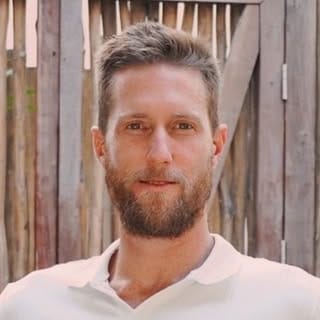
Sam - The Posture Dojo (@the_flowwolf) is an Alternative & Holistic Health Service creator on Instagram, also filed under Fitness & Health. The account has 98,872 followers and 550 published posts. Recent posts average 819 likes and 84 comments, an engagement rate of 0.96%.
With 98.9K followers, Sam - The Posture Dojo is a micro creator by the common 10,000 to 100,000 definition. Set against 3,807 accounts followed, the audience works out to about 26 followers per account Sam - The Posture Dojo follows. Sam - The Posture Dojo uses an Instagram professional account. Flinque files Sam - The Posture Dojo under Alternative & Holistic Health Service, with Fitness & Health as a secondary category.
The Instagram bio for Sam - The Posture Dojo runs to 12 words across 3 lines. Emoji sit alongside the words. The latest activity Flinque has on record for Sam - The Posture Dojo dates from September 2024.
Story Highlights
Unlocking shows the title and cover image of every story highlight this creator keeps pinned to the profile.
550 Posts
Of the 10 most recent posts shown for Sam - The Posture Dojo, 9 are videos and 1 is a carousel. That mix leans toward videos. Sam - The Posture Dojo has built a substantial archive of 550 posts. Against the audience, that is roughly 180 followers for each post published. Sam - The Posture Dojo also keeps 3 story highlights on the profile. All 10 carry captions, averaging 193 words each. The captions are written mainly in English. Words that recur across them include body, comment, system, nervous and breath. The captions tag #posturehealth, #fascialsystem, #nervoussystemregulation, #scoliosisawareness and #biohacking.
Tight jaw.�Collapsed chest.�Braced hips.
Those are not random aches.�They are adaptive strategies.
If you override those signals long enough, your nervous system shifts toward protection. Muscle tone rises. Breath narrows. Movement options shrink. What started as temporary bracing becomes your default.
That is how avoidance becomes structure.
Not because you are weak.�Because the system chose efficiency under stress.
Closed posture is not symbolic. It is mechanical. It limits expansion, rotation, respiration, force transfer. Over time, that limitation feeds mood, energy, and behavior.
You stop moving well.�You stop breathing well.�You stop regulating well.
This is not about confidence poses.�It is about updating patterns.
The nervous system adapts to new input.�Tissue remodels under load.�Stability can be rebuilt.
But it requires engagement.
You either train capacity or you rehearse protection.
Comment DOJO if you are ready to train.
In episode 76 of the I sits down with Sam Miller (Posture Dojo) to break down posture from a foundational, systems-based perspective.
We explain why posture is not something to force or “fix” with exercises alone, but an adaptive response shaped by:
• The nervous system
• Fascia & fascial tensegrity
• Breath & pressure regulation
• Vision, environment & safety
If you’ve struggled with chronic pain, postural asymmetries, or tension that never resolves, this episode will completely change how you understand your body.
Sam shares his personal journey of being diagnosed with kyphoscoliosis, and how understanding fascial tensegrity, reflexive patterns, trauma responses, and nervous system regulation allowed him to transform his posture from the inside out — without rigid correction drills or chasing fixes.
This conversation reframes posture as a living, adaptive system, and shows how breathwork, awareness, playful movement, and slowing down create real, sustainable change.
🧠 Key Takeaway:
Posture isn’t something to fix — it’s something to understand.
When you work with the nervous system, fascia, breath, and environment, posture reorganizes naturally as safety and adaptability improve.
🎧 Full episode available on YouTube & Spotify
💾 Save this if you’re working on posture, pain, or movement
📤 Share with someone dealing with chronic tension or postural issues
#PostureHealth #FascialSystem #NervousSystemRegulation #ScoliosisAwareness #Biohacking
I learned this the hard way.
I’ve done the hanging, the inversion, the decompression, the quick fixes that feel holy for 90 seconds.
And yeah, hanging can feel incredible.�You get space, you feel lighter, you feel relief.
Then you come back upright… and the pattern comes back with you.
Because posture is not a structure problem first.�It’s a control problem.
Your brain runs posture as a live sensorimotor skill, blending vision, vestibular balance, and proprioception to decide what “upright” feels safe (Horak 2006).
Most of the vagus nerve is body-to-brain traffic (Berthoud and Neuhuber 2000).
�So when you hang, you might change joint angles, but you don’t change the evidence your brain is reading.
If your breath is shallow, your pressure is chaotic, or your maps are noisy, your nervous system keeps the same protective bracing.
That’s why the diaphragm matters for posture, not just breathing (Hodges et al 2000).
�And why prediction matters… your brain updates from bodily evidence, not intention (Seth 2013).
Hanging gives relief.�It doesn’t give rewiring.
Lasting change comes from active input:�clear breath, coherent pressure, controlled movement, real stability.
Enjoy hanging if it feels good.�Just don’t confuse relief with change.
Comment DOJO to join our weekly live sessions and holistic posture protocol
Posture is one of the loudest signals you send upstream.
About 80 percent of vagus nerve fibers carry information from the body to the brain, not the other way around.
Berthoud and Neuhuber, 2000.
So when posture collapses, chest guarded, head forward, ribs locked, the brain receives a steady stream of “I’m under threat” data.
This isn’t philosophy. It’s physiology.
Slouched posture has been shown to increase negative affect, reduce persistence, and bias memory toward depressive content.
Peper and Lin, 2012.
Michalak et al., 2014.
Upright posture does the opposite. It improves mood, reduces stress reactivity, and increases perceived confidence and resilience.
Nair et al., 2015.
Wilkes et al., 2017.
Why?
Because posture changes breathing mechanics.
Breathing mechanics influence vagal tone.
Vagal tone regulates heart rate variability, emotional regulation, and threat perception.
Porges, 2011.
Across cultures, posture was never cosmetic.
In Egypt it was ma’at, harmony and order against chaos.
In Greece it was aretē, embodied excellence.
In yoga and Taoism it was channel capacity. Can life move through you or does it collapse at the chest?
Modern life keeps us in chronic low grade threat.
News cycles. Screens. Comparison. Cognitive overload.
The nervous system responds exactly as it evolved to.
It collapses inward to protect the vitals.
That posture is the physical shape of submission.
Posture maxing is not ego.
It’s rebellion against a nervous system stuck in defense.
Restore verticality and the signal flips.
Breath deepens.
Voice drops.
Reactivity decreases.
Response replaces reflex.
Mindset doesn’t lead.
State does.
Meet us in the dojo.
We’re unraveling, aligning, and fortifying the system that everything else sits on.
Comment DOJO and I’ll send you the link.
Which means: Your body sets your reality before your thoughts even arrive.
Here’s why this matters for posture.
Roughly 70–80% of vagus nerve fibers carry information from the body up to the brain, not the other way around.
�This means your brain is constantly being informed about breath mechanics, internal pressure, tissue tension, and visceral state before it forms perception, emotion, or motivation.
It’s evidence-based physiology:
Studies show that:�• The vagus nerve is predominantly afferent, body → brain�Berthoud & Neuhuber, 2000�• Interoceptive signals shape emotion, confidence, and threat perception�Critchley et al., 2004�• The brain predicts reality based on incoming body signals, not intention�Seth, 2013�• Breathing mechanics directly influence postural control and spinal stability�Hodges & Gandevia, 2000�• Fascia is richly innervated and contributes to proprioception and threat signaling�Schleip et al., 2003
So when posture collapses, a slumped, guarded body sends signals like:
�Unstable pressure�Restricted breath�Protective tone
The brain reads this as “not safe” and adapts perception, mood, and movement accordingly.
That’s why:�• Standing tall feels exhausting�• Stretching creates resistance�• “Trying harder” makes things worse�• Insight doesn’t translate into change
You can’t override this cognitively.
The nervous system only updates when it receives new evidence from the body.
That’s the shift:
�From forcing correction�To restoring sequence
�From commands�To coherent sensations and safety
When breath, pressure, and movement are reorganized gently, posture doesn’t need to be held.
It re-emerges.
If you’ve been stuck despite knowing “what to do,” now you know what you “have to do”.
Comment “flossing” if you’d like the link to get access to the live workshop in the posture dojo.
It can become more like sticky, dehydrated gel.
When your nervous system reads threat, your body defaults to protection: less slide, less rotation, less micro movement. That changes the feel of the tissue. Not because you are broken, but because your system is prioritizing safety over fluid motion.
Here’s the part most people miss: fascia is a living sensory organ, packed with free nerve endings and even sympathetic fibers, especially in places like the thoracolumbar fascia. So when it loses glide, your brain can interpret normal inputs as “danger,” and pain becomes the alarm that forces attention (Mense et al., 2019; Fede et al., 2021).
Also, fascial tension is not purely passive. Myofibroblasts can actively contract connective tissue and maintain tension over time, meaning “stiffness” can be a biological state, not just a stretching problem (Schleip et al., 2019).
And the “sticky” piece matters: hyaluronan governs sliding between layers. With immobility and low shearing forces, viscosity rises and lubrication drops, so tissues literally glide worse (Cowman et al., 2015; Pratt et al., 2021).
So the goal is not to “force it loose.”
The goal is to restore glide and slide while signaling safety.
That’s why we’re doing Fascia Flossing. Low impact, multi plane, nervous system friendly, built to reintroduce motion without triggering more bracing.
Comment FLOSSING and I’ll send you the link.
Workshop is inside Posture Dojo for premium members.
I would like to connect with you if you are in a journey of restoring a compromised posture or if you are dedicated to helping others on that journey.
For far too long I waited for solutions to come from the outside to help me.
It’s taken me many years but everything that comes from the outside is just an invitation and a permission slip to wake up the innate wisdom that’s already inside.
I have distilled everything that has been useful to me on my postural correction journey into a protocol I call Height Maximus.
Each spine is unique and there are severe educational and economic barriers that prevent people from waking up their ability to become the sculptor and creator of their mind and body.
I am on a mission to share everything I wish I knew when I was teenager realizing my spine and my ideal posture has been compromised.
There is a long and challenging road ahead for those who choose to walk it, but one that is full of fruitful rewards.
I invite you to walk this road with me. The first step to achieving success is believing you actually can. You can do that by surrounding yourself with people who are correcting their posture holistically, achieving their highest potential posture and living with maximum life force energy flow.
Comment ‘DOJO’ and I’ll share you access to get my entire Height Maximus Posture Correction Protocol for free.
#posturecorrection #scoliosis #kyphosis #scoliosisexercise #scoliose
The first step is believing you can do something about your own posture, this requires accepting responsibility for it and that no one is coming to do the work for you.
The next step is believing the work and discomfort and facing the weaknesses is worth it, as many people don’t even try because gravity wins in the end anyways.
Then you need a plan. I’ve created the Height Maximus protocol with everything I wish I would have done as soon as I started my journey as a teenager. (Comment DOJO and I’ll send you the link to learn more about that.
Then you need discipline and consistency over a long period of time to do the work. Making an investment in a coach, or having a great supportive group of people around you who share ambitious discipline will also help you here.
Each week I have amazing expert conversations to level up your understanding, mindset and the skills you need to become a master sculptor of your body.
You’re always sculpting your body the way you think, breath, and move through life, so it’s more about becoming intentional in the way you do it.
Thanks for being here! social media is quite noisy so I welcome you and any questions you have into the dojo so we can have constructive community conversations!
See you inside!
And that’s about it
Sam - The Posture Dojo's engagement
Sam - The Posture Dojo's engagement rate on Instagram is 0.96%, under 1%, fewer than 1 like or comment per 100 followers. On a typical post that comes to about 1 like or comment for every 104 followers. Comments stay close to likes on Sam - The Posture Dojo's posts, at 819 likes and 84 comments on average, about 9.8 likes per comment.
Engagement rate
0.96%
- Avg likes
- 819
- Avg comments
- 84
- Interactions : followers
- 1 : 104
Lookalike Creators
A free account lists creators whose audiences behave like this one, ready to shortlist and compare side by side.
Age & Gender
Unlocking shows how this audience splits across age bands and gender, charted from follower data.
Audience Location
Unlocking reveals the countries and cities where the most active followers of this account are concentrated.
Primary Language
Unlocking shows the languages this audience uses most in comments, interactions and the content it consumes.
Audience Interests
Unlocking lists the topics and categories this audience follows and engages with most often across the platform.
Authenticity
Unlocking scores how genuine the audience is, flagging fake, inactive or bot followers found in engagement patterns.
Audience Quality Score
Unlocking gives one overall audience quality score combining authenticity, engagement, follower activity and audience relevance.
Brand Affinity
Unlocking names the brands this audience already follows, mentions or engages with across social platforms.
Content Strategy
Unlocking breaks down the content pillars, tone and visual style this creator uses, and which formats perform best.
Commercial Insights
Unlocking shows collaboration types, an estimated pricing tier and a brand safety risk read for sponsored campaigns.
Industry Fit
Unlocking rates how well this creator and audience align with specific industry verticals and brand categories.
Research Sam - The Posture Dojo further
Sam - The Posture Dojo is listed in 1 Flinque ranking of Instagram creators, and the free tools beside it measure the same figures for any public account.
Related rankings
Frequently asked questions
These answers about Sam - The Posture Dojo are generated from the Instagram profile data Flinque holds for the account.
Who is Sam - The Posture Dojo?
Sam - The Posture Dojo (@the_flowwolf) is an Alternative & Holistic Health Service creator on Instagram, also filed under Fitness & Health. Sam - The Posture Dojo uses an Instagram professional account. The Instagram bio for Sam - The Posture Dojo runs to 12 words across 3 lines.
How many followers does Sam - The Posture Dojo have?
Sam - The Posture Dojo has 98,872 followers on Instagram (98.9K). Set against 3,807 accounts followed, the audience works out to about 26 followers per account Sam - The Posture Dojo follows. Sam - The Posture Dojo has built a substantial archive of 550 posts.
What is Sam - The Posture Dojo's engagement rate?
Sam - The Posture Dojo's engagement rate on Instagram is 0.96%, under 1%, fewer than 1 like or comment per 100 followers. On a typical post that comes to about 1 like or comment for every 104 followers. Comments stay close to likes on Sam - The Posture Dojo's posts, at 819 likes and 84 comments on average, about 9.8 likes per comment.
What does Sam - The Posture Dojo post about on Instagram?
Flinque files Sam - The Posture Dojo under Alternative & Holistic Health Service, with Fitness & Health as a secondary category. Of the 10 most recent posts shown for Sam - The Posture Dojo, 9 are videos and 1 is a carousel. The 10 recent Instagram captions Flinque holds for Sam - The Posture Dojo repeatedly use the words body, comment, system, nervous and breath. Sam - The Posture Dojo's captions carry hashtags such as #posturehealth, #fascialsystem and #nervoussystemregulation. Sam - The Posture Dojo writes those captions mainly in English. Sam - The Posture Dojo keeps 3 story highlights, which open with a free Flinque account.
How do I contact Sam - The Posture Dojo for a collaboration?
Sam - The Posture Dojo's contact details are not published on Flinque's public profile. The Instagram bio links to 2 external sites, and a free Flinque account opens those links. Brands with a free Flinque account can shortlist Sam - The Posture Dojo and use Flinque's outreach tools wherever a contact route is on file.
Links
Sam - The Posture Dojo's own Instagram profile is the one outbound link Flinque publishes for the account, and the 2 bio links open after signing up.
Public profile data sourced from Instagram. Flinque is not affiliated with Sam - The Posture Dojo.