- Following 3.9K
- Followers 127.4K
- Engagement 140.49%
- Avg likes 212.7K
- Avg comments 290
About Luis A Rivera
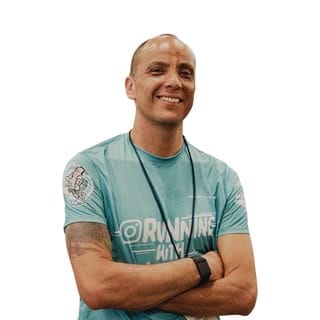
Luis A Rivera (@runningwithlucho) is a Reel creator creator on Instagram, also filed under Photography & Video. The account has 127,416 followers and 1,607 published posts. Recent posts average 212,725 likes and 290 comments, an engagement rate of 140.49%.
An audience of 127.4K puts Luis A Rivera in the mid-tier, between 100,000 and 1 million followers. Set against 3,865 accounts followed, the audience works out to about 33 followers per account Luis A Rivera follows. Luis A Rivera carries Instagram's verified badge and uses an Instagram professional account. Flinque files Luis A Rivera under Reel creator, with Photography & Video as a secondary category.
The Instagram bio for Luis A Rivera runs to 15 words across 4 lines. The bio mentions @thefeed and @strydrunning. The latest activity Flinque has on record for Luis A Rivera dates from March 2026.
1,607 Posts
Of the 10 most recent posts shown for Luis A Rivera, 5 are carousels and 5 are videos. No single format accounts for most of them. Luis A Rivera has built a substantial archive of 1,607 posts. Against the audience, that is roughly 79 followers for each post published. All 10 carry captions, averaging 235 words each. The captions are written mainly in English. Words that recur across them include runners, mile, running, first and part. The captions tag #runningwithlucho, #feedambassador, #fueledbythefeed, #ad and #oofos.
They’re short enough that pacing mistakes matter.
They’re long enough that courage matters.
And they’re honest enough to tell you exactly where your fitness is today.
One thing I always recommend: don’t let your watch run the mile for you.
If you really want to know your mile time, trust the measured distance on the track first.
GPS is an incredible tool, but on a track it can drift, smooth corners, and sometimes mark the mile a little early or a little late. Over a marathon, that difference is usually insignificant. Over a mile, it can completely change the result.
That’s why this guide is built around the track.
Use the first 200 m as your opening checkpoint.
Then check your cumulative time every 400 m.
Stay patient early.
Stay committed in the middle.
Race the final lap.
And remember something important:
A runner chasing 10:00 is working just as hard as a runner chasing 4:30.
The goal isn’t to impress anyone.
The goal is to learn, improve, and become a better runner than the version of yourself that showed up last time.
What mile time are you aiming for?
#runningwithlucho #FeedAmbassador #FueledByTheFeed
Tomorrow we have an important day at the track, we will be running a controlled (but fast) 800m as part of our normal workout. Coach will be sharing more info on the workout and logistics. Please remember this will be a practice run for our mile time trial next Friday.
Let's make sure to be there tomorrow, either to workout, to race, and the most important to cheer!! It does not matter how fast you run, what matters is that you are working on improving and being there for your teammates.
Help us spread the word and
See you at 5:35am sharply.
Because if you only look at the medals and statistics, you probably won’t fully understand why people still talk about him the way they do.
The impact was bigger than results.
Pre made running feel emotional.
Dangerous.
Alive.
He raced from the front when most people played it safe.
Sometimes it worked.
Sometimes it completely destroyed him.
But people respected that he was willing to suffer openly instead of hiding and waiting for the perfect moment.
And maybe that’s why his story survived for so long.
Not because he was perfect.
Not because he won everything.
But because runners saw someone competing with honesty.
You can still feel it today.
In Oregon.
At the Prefontaine Classic.
In Nike’s early running culture.
Even in the way a lot of runners romanticize courage over caution.
And honestly, the saddest part of his story might be this:
Steve Prefontaine died at 24 years old…
while many people believed he was still becoming the runner he was truly supposed to be.
That’s rare.
Most legends leave because their story ended.
Pre became a legend because his story never got the chance to.
This Friday and will have an 800 meter time trial as a practice run for next week’s mile time trial ⏱️
🎯 The Goal:
The main goal is for the team to improve their mile time. This will help improve your other distances, give you a boost of confidence 💪, and help us coaches create more specific training paces for your weekly workouts.
Heats: We will have three heats (specific times TBD). Please make sure to seed yourself in the right groups and stagger yourself accordingly.
• Heat 1 — Group ABC
• Heat 2 — Group 1-2
• Heat 3 — Group 3-4-5
This is not a race 🚫🏁 This is simply part of our Friday workout.
As always, everyone is welcome, all ability levels, and practice is open 🙌
See you this Friday at Tropical Park at 5:35 AM 🌅⚡
Most runners think heat problems happen only when someone is out of shape.
That’s a dangerous mistake.
Hyperthermia can happen when your body produces heat faster than it can release it. And for runners, that risk goes up fast when you combine hard effort, humidity, direct sun, poor hydration, lack of heat acclimation, and the ego to keep pushing when your body is already sending warning signs.
The scary part is that it doesn’t always feel dramatic at first.
Sometimes it starts with a pace that suddenly feels harder than it should.
A heart rate that climbs too high.
Dizziness.
Chills.
Nausea.
Confusion.
Or that feeling that your body is no longer responding normally.
That’s when smart runners stop pretending they are just “being tough.”
Because in the heat, toughness is not ignoring symptoms.
Toughness is knowing when to adjust.
✅ Slow down before you are forced to stop
✅ Pay attention to humidity and dew point, not just temperature
✅ Start earlier when possible
✅ Hydrate with a plan, not panic
✅ Use electrolytes when conditions and sweat loss require it
✅ Wear light, breathable clothing
✅ Take heat acclimation seriously
✅ Stop running if symptoms start building
And this matters even more here in Miami.
Humidity changes everything. Sweat only cools you when it evaporates. When the air is already heavy with moisture, your body has to work harder to stay cool, even if the pace looks “easy” on paper.
The goal is not to fear summer training.
The goal is to respect it.
Train smart enough to stay consistent, healthy, and ready for the next run.
Save this guide and share it with a runner who needs to stop treating every hot day like a normal training day.
#runningwithlucho #FeedAmbassador #FueledByTheFeed
FOR YEARS, PEOPLE THOUGHT A SUB 2 HOUR MARATHON IN OFFICIAL RACE CONDITIONS WAS ALMOST IMPOSSIBLE.
Then Yomif Kejelcha showed up for his first marathon ever… and ran 1:59:41.
Not only was it the fastest marathon debut in history. He also became only the SECOND human ever to break the 2 hour barrier in an official marathon.
And the craziest part?
He didn’t even win the race.
That tells you how far marathon running has evolved.
But the truth is, this performance didn’t come out of nowhere.
has been building toward this moment for years.
❗ World record holder in the half marathon with 57:30
❗ 12:38 for 5000m
❗ 26:31 for 10,000m
❗ Former indoor mile world record holder at 3:47
This was not a “good debut.”
This was one of the greatest marathon debuts ever seen.
What impressed me the most was HOW he ran it.
He went through halfway in 60:29 and still closed the second half faster in 59:12.
That means he didn’t just survive the marathon. He accelerated it.
And maybe that’s the most impressive part of all.
This didn’t look like someone discovering the marathon.
It looked like someone who already belonged there.
As runners, sometimes we only see the final result. But performances like this are built over years of consistency, speed development, aerobic work, and patience.
A first marathon is never really a first marathon. The work usually started long before the starting line.
Do you think we’ll see Kejelcha become one of the next great marathon stars?
Original video by (remix)
They choose based on hype, weight, marketing, or what a pro wears. Or simply because the shoe feels “fast” during the first few miles.
But marathons are not decided at mile 3.
They are decided when fatigue starts changing your mechanics.
Before Boston and London, I realized I needed to understand MY body before judging any shoe.
That is where played a huge role.
The 3D fit analysis helped me understand things most runners never evaluate:
👣 Foot shape 📏 Width 🦶 Arch profile ⚖️ Pressure distribution ↔️ Left to right differences 👟 Volume inside the shoe
And something important surprised me:
My left and right foot did not measure the same.
A lot of runners spend YEARS wearing the wrong size without realizing it. That affects comfort, stability, fatigue, and efficiency late in races.
But the scan was only the beginning.
The real testing happened during:
✅ Long runs ✅ Marathon pace efforts ✅ Workouts ✅ Fatigue days ✅ Harder back to back sessions
Because the real question was not:
“What shoe feels the fastest fresh?”
It was:
“What shoe helps me maintain good mechanics when I am tired?”
That changes everything.
During testing I paid attention to:
📊 Impact on landing 📊 Calf and soleus fatigue 📊 Stability under fatigue 📊 Transition through the stride 📊 Efficiency at marathon pace 📊 Recovery the next day
Boston made this even more important because the early downhills can destroy your legs if the shoe does not protect you well.
And London came only 6 days later.
So this was not only about speed. It was about protection, recovery, stability, and sustainability under fatigue.
That is why I chose the ASICS Metaspeed Sky Tokyo.
Not because it was the most popular shoe. Not because it was the most expensive. Not because a professional uses it.
But because it worked best for MY body, MY mechanics, and MY goals for Boston and London.
The best shoe is not the best shoe on the market.
#ad #OOFOS #oofospartner
⚠️ Going out too hard shifts blood away from your stomach, making digestion harder and raising the risk of nausea or vomiting. On top of that, burning glycogen too quickly means your energy bank runs dry and the wall at mile 20 comes fast and hard.
✅ The best marathoners in the world avoid this trap. They pace evenly, or even run negative splits. Research shows that consistent pacing reduces the likelihood of dropouts and increases the chance of finishing strong.
Here’s how to avoid the early trap:
1️⃣ Hold back during the first 5K, no matter how good you feel
2️⃣ Find a rhythm that feels sustainable and controlled
3️⃣ Save your fight for the final 10K, when the real race begins
A marathon is not decided in the first mile. It is decided in how much respect you give the distance, and how smart you manage your energy.
💬 Have you ever started too fast in a race? What did you learn from it?
📉 Are we running marathons, or just collecting medals?
Many runners now jump from one race to another, chasing the next big challenge without giving their bodies time to recover. Training is rushed, structured plans are ignored, and proper coaching is often replaced by online influencers with no real experience in guiding an athlete through safe and effective marathon preparation.
🚩 Not everyone who runs a marathon is qualified to train others.
In today’s running culture, it’s easy to find people who believe that just because they’ve finished 42K, they have the knowledge to coach others. But running a marathon and training someone to do it are two entirely different things. Poor coaching, lack of scientific knowledge, and reckless training plans are leading many runners into overuse injuries and even serious health risks.
🏆 Even elite athletes respect the marathon.
Elite runners plan their seasons carefully, running only a few marathons per year, because they understand the toll it takes on the body. So why do many amateur runners sign up for multiple marathons in a year, believing they can handle the distance without proper recovery?
💡 For me, running a marathon is more than race day it’s about the entire journey. Every training session, every sacrifice, every moment of growth along the way is what truly matters. More than chasing a personal best, running gives me life. That’s why I respect the process, because the marathon isn’t just about finishing it’s about everything that happens before I get to the starting line.
So here’s the real question: Are we respecting the marathon, or are we turning it into a social challenge with no real meaning?
💬 What’s your take on this?
Luis A Rivera's engagement
Luis A Rivera's engagement rate on Instagram is 140.49%, over 6%, more than 6 likes and comments per 100 followers. A typical post draws likes and comments in numbers close to the size of the audience itself. Likes outnumber comments by roughly 734 to 1, with 212,725 likes and 290 comments on an average post, so most reactions are taps rather than replies.
Engagement rate
140.49%
- Avg likes
- 212.7K
- Avg comments
- 290
- Interactions : followers
- 1 : 1
Lookalike Creators
A free account lists creators whose audiences behave like this one, ready to shortlist and compare side by side.
Age & Gender
Unlocking shows how this audience splits across age bands and gender, charted from follower data.
Audience Location
Unlocking reveals the countries and cities where the most active followers of this account are concentrated.
Primary Language
Unlocking shows the languages this audience uses most in comments, interactions and the content it consumes.
Audience Interests
Unlocking lists the topics and categories this audience follows and engages with most often across the platform.
Authenticity
Unlocking scores how genuine the audience is, flagging fake, inactive or bot followers found in engagement patterns.
Audience Quality Score
Unlocking gives one overall audience quality score combining authenticity, engagement, follower activity and audience relevance.
Brand Affinity
Unlocking names the brands this audience already follows, mentions or engages with across social platforms.
Content Strategy
Unlocking breaks down the content pillars, tone and visual style this creator uses, and which formats perform best.
Commercial Insights
Unlocking shows collaboration types, an estimated pricing tier and a brand safety risk read for sponsored campaigns.
Industry Fit
Unlocking rates how well this creator and audience align with specific industry verticals and brand categories.
Research Luis A Rivera further
Flinque ranks Instagram creators in Reel creator and Photography & Video, categories Luis A Rivera is filed under, and its free tools measure the same figures for any public account.
Frequently asked questions
These answers about Luis A Rivera are generated from the Instagram profile data Flinque holds for the account.
Who is Luis A Rivera?
Luis A Rivera (@runningwithlucho) is a Reel creator creator on Instagram, also filed under Photography & Video. Luis A Rivera carries Instagram's verified badge and uses an Instagram professional account. The Instagram bio for Luis A Rivera runs to 15 words across 4 lines.
How many followers does Luis A Rivera have?
Luis A Rivera has 127,416 followers on Instagram (127.4K). Set against 3,865 accounts followed, the audience works out to about 33 followers per account Luis A Rivera follows. Luis A Rivera has built a substantial archive of 1,607 posts.
What is Luis A Rivera's engagement rate?
Luis A Rivera's engagement rate on Instagram is 140.49%, over 6%, more than 6 likes and comments per 100 followers. A typical post draws likes and comments in numbers close to the size of the audience itself. Likes outnumber comments by roughly 734 to 1, with 212,725 likes and 290 comments on an average post, so most reactions are taps rather than replies.
What does Luis A Rivera post about on Instagram?
Flinque files Luis A Rivera under Reel creator, with Photography & Video as a secondary category. Of the 10 most recent posts shown for Luis A Rivera, 5 are carousels and 5 are videos. The 10 recent Instagram captions Flinque holds for Luis A Rivera repeatedly use the words runners, mile, running, first and part. Luis A Rivera's captions carry hashtags such as #runningwithlucho, #feedambassador and #fueledbythefeed. Luis A Rivera writes those captions mainly in English.
How do I contact Luis A Rivera for a collaboration?
Luis A Rivera's contact details are not published on Flinque's public profile. The Instagram bio links to 3 external sites, and a free Flinque account opens those links. Brands with a free Flinque account can shortlist Luis A Rivera and use Flinque's outreach tools wherever a contact route is on file.
Links
Luis A Rivera's own Instagram profile is the one outbound link Flinque publishes for the account, and the 3 bio links open after signing up.
Public profile data sourced from Instagram. Flinque is not affiliated with Luis A Rivera.