- Following 741
- Followers 7.5K
- Engagement 4.05%
- Avg likes 339
- Avg comments 17
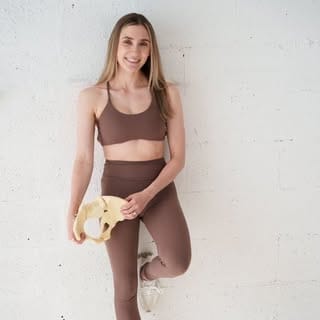
About Dr. Alexia Garcia | Pelvic Floor PT
Dr. Alexia Garcia | Pelvic Floor PT (@rootedwellpt) is a Health & wellness website creator on Instagram, also filed under Healthcare. The account has 7,527 followers and 201 published posts. Recent posts average 339 likes and 17 comments, an engagement rate of 4.05%.
Dr. Alexia Garcia | Pelvic Floor PT belongs to the nano tier, the band usually drawn between 1,000 and 10,000 followers. Dr. Alexia Garcia | Pelvic Floor PT follows 741 accounts, so the audience is roughly 10 times the size of the list followed. Dr. Alexia Garcia | Pelvic Floor PT uses an Instagram professional account. Flinque files Dr. Alexia Garcia | Pelvic Floor PT under Health & wellness website, with Healthcare as a secondary category.
The Instagram bio for Dr. Alexia Garcia | Pelvic Floor PT runs to 21 words across 4 lines. Emoji sit alongside the words. The latest activity Flinque has on record for Dr. Alexia Garcia | Pelvic Floor PT dates from January 2025.
Story Highlights
Unlocking shows the title and cover image of every story highlight this creator keeps pinned to the profile.
201 Posts
Of the 10 most recent posts shown for Dr. Alexia Garcia | Pelvic Floor PT, 8 are videos and 2 are carousels. That mix leans toward videos. 201 published posts give Dr. Alexia Garcia | Pelvic Floor PT a moderate archive on Instagram. Against the audience, that is roughly 37 followers for each post published. Dr. Alexia Garcia | Pelvic Floor PT also keeps 8 story highlights on the profile. All 10 carry captions, averaging 218 words each. The captions are written mainly in English. Words that recur across them include these, during, it’s, pelvis and isn’t.
One important way to prepare for labor is to understand fetal stations and know how to create more space in the pelvis for the baby depending on what station they are in.
So before we go further, quick lesson on fetal stations:
Fetal station describes how far baby has descended into the pelvis.
It’s measured in relation to the ischial spines which are the narrowest part of the mid-pelvis.
Higher (negative numbers) = baby is still higher in the pelvis.
Zero = baby is at the mid-pelvis.
Positive numbers = baby is lower and moving toward birth.
If baby is still higher in the pelvis, the goal is often to create more space at the top — the pelvic inlet.
One simple way to remember is thinking about your thighs facing outward.
That external rotation bias can help maximize inlet space and support engagement and descent.
With an epidural, this can look like any of the positions shown in the video using the peanut ball.
Next up in part 2: what positions to think about when baby is rotating through the middle of the pelvis.
Save this for birth prep and stay tuned for part 2!
One of the biggest misconceptions about epidurals?
“That means I can’t move anymore.”
Not true.
You absolutely CAN and SHOULD move with an epidural and a peanut ball is KEY for this!
You may not be walking but you can still:
• Change positions
• Adjust angles
• Rotate side to side
• Modify hip positioning
Staying in one position for hours isn’t ideal for labor progress.
Even with an epidural, you can:
• Be upright (head and shoulders elevated)
• Change positions every 20–30 minutes
• Be strategic about how you position your hips
Different positions open different areas of the pelvis.
If baby needs more inlet space, one strategy may help.
If baby needs more outlet space, another may be better.
Epidurals don’t have to limit physiology.
They just change how we work with it.
Choose a position.
Switch every 20–30 minutes.
Give your body options.
Remember to comment “BREAK IT DOWN” if you want me to next break these positions down depending on where baby is in the pelvis ❤️
So here’s what I want every mom to know:
• Log roll when getting out of bed: instead of sitting straight up, roll onto your side first, moving your body as one unit instead of twisting through your abdomen. Exhale as you move. Log rolling reduces strain on your abdominal wall and decreases pain.
• Brace with a pillow when doing something (or when about to do something) that hurts: If you’re coughing, laughing, sneezing, or even standing from a chair, gently hug a pillow against your incision for support. It decreases pulling and makes movement feel safer. You’ll find that it can drastically decrease pain too.
• Slowly exhale through pursed lips during bowel movements: Inhale through your nose, then gently blow air out like you’re blowing out a candle. Avoid holding your breath or bearing down. This helps regulate pressure instead of forcing it downward into healing tissue.
• Lie flat and practice diaphragmatic breathing: Place your hands over your incision. Breathe in through your nose and let your ribcage expand. Slowly exhale through pursed lips. This reconnects your diaphragm, deep core, and nervous system while supporting circulation and healing. Lying flat is also extremely helpful for preventing the formation of adhesions around your incision.
All of these small daily things protect your abdominal wall and help with controlling pain.
If you’re in those first 2 weeks, save this.
If you know someone who is, send it to her ❤️
Most traditional ab exercises primarily train the superficial abdominal muscles. They’re great for producing movement and building strength, but they don’t automatically retrain how your system manages pressure or stabilizes during everyday tasks.
Your deep core is a coordinated system that includes your diaphragm, pelvic floor, and deeper trunk muscles. Its job isn’t to “work harder” but to work at the right time, with the right amount of tension, while you breathe, move, lift, and transfer load.
When that coordination is missing, it’s common to see things like doming or coning, persistent diastasis, pelvic floor symptoms, or the feeling that your core just never feels strong no matter how much you train. In those cases, the issue usually isn’t effort or discipline, it’s that the wrong system is being emphasized first.
This is why rehab and postpartum recovery shouldn’t start with harder ab exercises. Deep core control and pressure management come first. Once that foundation is in place, ab strength actually transfers and starts to feel supportive instead of frustrating.
Strong abs are not the same as a well-functioning core.
And feeling strong is about coordination, not just intensity.
This is the first thing I teach my patients whether they’re pregnant or postpartum. Want to learn how to activate your deep core? DM me and we’ll figure it out together 🤎
SPD pain often flares with movements that twist, pull, or unevenly load the pelvis. These small changes help reduce irritation by keeping movement more supported and balanced throughout the day.
These modifications can make daily life more comfortable, especially on flare days. But my other big suggestion is to go see a pelvic floor therapist (one that specializes in obstetrics is a big bonus!) since we go a step further by helping your body better tolerate movement and pregnancy-related changes over time.
If you have SPD try these out and let me know if they helped! ❤️
As a lover of movement my entire life and being a physical therapist, its been hard to not get a chance to have the time for perfect hour long workouts since having kids 😵💫
In this season of two under two I’ve had to lower my expectations for what a workout will currently look like because otherwise it will literally just not happen!
So here is an accumulation of everything I’ve learned these past 5 months taking care of two babies while also trying to get exercise done for myself. I hope this helps other mamas out there struggling to get exercise in❤️
It’s about finding the right fit for you.
These questions aren’t meant to challenge or judge, they’re meant to help you understand how your OB practices, communicates, and supports patient choice.
You’re allowed to ask questions.
You’re allowed to want care that aligns with your values.
Why these questions matter 👇
•Asking about C-section rates helps you understand practice patterns and how often surgery is used when labor doesn’t go as planned.
•Asking about pushing positions shows whether your provider supports biomechanics and flexibility during birth, not just convenience.
•Asking about episiotomy rates gives insight into how perineal protection and evidence-based care are approached.
•Asking about support for unmedicated birth reveals how your preferences are respected, even if plans change.
•Asking about pelvic floor physical therapy helps you see whether recovery and prevention are valued, not just delivery outcomes.
•Asking how slow labor or prolonged pushing is handled shows patience and thresholds for intervention
•Asking how decisions are made when plans change highlights whether care is collaborative or directive.
•Asking about early postpartum follow-up shows whether recovery is treated as an ongoing process, not a single 6-week checkpoint.
• Asking how your OB works with doulas reveals their approach to team-based, patient-centered care.
Care works best when it’s collaborative.
Save this for later or share it with a pregnant friend 🤍
1. Avoiding core exercise during pregnancy seems to be rooted in the fear of creating a diastasis or making it worse (both are wrong). Poor pressure management is the problem not core work. The deep core (with the pelvic floor and diaphragm) actually helps support the spine, pelvis, and growing belly. Avoiding all core work often leads to more compensation, not fewer symptoms.
2. I find the myth of no twisting during pregnancy to be SO random. We rotate and twist every day of our lives to do simple tasks, it’s unavoidable! There is also no evidence that twisting causes issues during pregnancy
3. Ok as for no lifting greater than 20lbs…can we all agree how unrealistic this is?? (I myself was pregnant while also carrying around a 30lb toddler daily). There is no universal weight limit that applies to every pregnant woman. What matters is how the load is lifted, how it’s managed, and how the body responds.
4. Impact isn’t automatically unsafe. It depends on symptoms, pelvic floor function, and overall capacity. Some people tolerate modified impact very well during pregnancy. Others may not, and that’s okay!
5. This myth came from the fact that prolonged time on your back in late pregnancy may lead to symptoms. But earlier in pregnancy this usually isn’t an issue. In addition you are not on your back for a prolonged period of time when doing just an exercise or two on your back. Just listen to your body with this one. If you tolerate it great! If you start having symptoms then modify.
6. As a physical therapist this one bothers me SO much! Just because you’re pregnant doesn’t mean you can’t start exercise. I’m not saying to start training for your first ever marathon or weightlifting competition. But simple exercise with the goal to improve health, function and recovery is most definitely okay!
Hopefully this clears up these common myths!
Why this matters:
• Helps manage pressure as your belly grows and tissues adapt
• Allows the pelvic floor to share the workload instead of overworking
• Reduces compensations that contribute to back pain, pelvic pressure, leaking, or heaviness
• Provides better support for your spine and pelvis during daily movement
• Lays the foundation for smoother healing and stronger core–pelvic floor coordination postpartum
This isn’t about doing more exercises. It’s about learning how to activate the right muscles so your body can work with you during pregnancy and recovery.
Any questions on the deep core you want me to answer? Leave a comment below! 🤍
My name is Alexia Garcia and I am a Women’s Health Physical Therapist. I’ve dedicated the majority of my career to specializing in pelvic floor therapy and obstetrics once I realized how behind and ignored most women’s health issues were in our society. Being able to improve pain or quality of life when the person is told that there is nothing to be done is a very rewarding part of what I do! I run my own practice in south Florida so come find me if you’re here!
I’m also a new mom to my 10 month old baby boy James and I’ve been loving the roller coaster that is motherhood. I’ve grown a lot personally with the journey and I also relate better to all of my mamas that come see me (I totally get it now).
Some random facts about me is that I’m also a dog mom to a goldendoodle (Piper), I love cold weather (would not be living in Miami if I had a choice), I love to exercise (literally get antsy and depressed when I can’t), I’ve had two hip surgeries from my previous dance life (the experience rehabbing from those has definitely helped shape me into the therapist I am today).
Again I’m happy that you’re here and I hope that you can learn helpful information about pelvic health, pregnancy and postpartum with my page! 😊
*Also how amazing are these photos from 😍
Dr. Alexia Garcia | Pelvic Floor PT's engagement
Dr. Alexia Garcia | Pelvic Floor PT's engagement rate on Instagram is 4.05%, between 3% and 6%, or 3 to 6 likes and comments per 100 followers. On a typical post that comes to about 1 like or comment for every 25 followers. An average post collects 339 likes and 17 comments, close to 20 likes for each comment.
Engagement rate
4.05%
- Avg likes
- 339
- Avg comments
- 17
- Interactions : followers
- 1 : 25
Lookalike Creators
A free account lists creators whose audiences behave like this one, ready to shortlist and compare side by side.
Age & Gender
Unlocking shows how this audience splits across age bands and gender, charted from follower data.
Audience Location
Unlocking reveals the countries and cities where the most active followers of this account are concentrated.
Primary Language
Unlocking shows the languages this audience uses most in comments, interactions and the content it consumes.
Audience Interests
Unlocking lists the topics and categories this audience follows and engages with most often across the platform.
Authenticity
Unlocking scores how genuine the audience is, flagging fake, inactive or bot followers found in engagement patterns.
Audience Quality Score
Unlocking gives one overall audience quality score combining authenticity, engagement, follower activity and audience relevance.
Brand Affinity
Unlocking names the brands this audience already follows, mentions or engages with across social platforms.
Content Strategy
Unlocking breaks down the content pillars, tone and visual style this creator uses, and which formats perform best.
Commercial Insights
Unlocking shows collaboration types, an estimated pricing tier and a brand safety risk read for sponsored campaigns.
Industry Fit
Unlocking rates how well this creator and audience align with specific industry verticals and brand categories.
Research Dr. Alexia Garcia | Pelvic Floor PT further
Flinque ranks Instagram creators in Health & wellness website and Healthcare, categories Dr. Alexia Garcia | Pelvic Floor PT is filed under, and its free tools measure the same figures for any public account.
Frequently asked questions
These answers about Dr. Alexia Garcia | Pelvic Floor PT are generated from the Instagram profile data Flinque holds for the account.
Who is Dr. Alexia Garcia | Pelvic Floor PT?
Dr. Alexia Garcia | Pelvic Floor PT (@rootedwellpt) is a Health & wellness website creator on Instagram, also filed under Healthcare. Dr. Alexia Garcia | Pelvic Floor PT uses an Instagram professional account. The Instagram bio for Dr. Alexia Garcia | Pelvic Floor PT runs to 21 words across 4 lines.
How many followers does Dr. Alexia Garcia | Pelvic Floor PT have?
Dr. Alexia Garcia | Pelvic Floor PT has 7,527 followers on Instagram (7.5K). Dr. Alexia Garcia | Pelvic Floor PT follows 741 accounts, so the audience is roughly 10 times the size of the list followed. 201 published posts give Dr. Alexia Garcia | Pelvic Floor PT a moderate archive on Instagram.
What is Dr. Alexia Garcia | Pelvic Floor PT's engagement rate?
Dr. Alexia Garcia | Pelvic Floor PT's engagement rate on Instagram is 4.05%, between 3% and 6%, or 3 to 6 likes and comments per 100 followers. On a typical post that comes to about 1 like or comment for every 25 followers. An average post collects 339 likes and 17 comments, close to 20 likes for each comment.
What does Dr. Alexia Garcia | Pelvic Floor PT post about on Instagram?
Flinque files Dr. Alexia Garcia | Pelvic Floor PT under Health & wellness website, with Healthcare as a secondary category. Of the 10 most recent posts shown for Dr. Alexia Garcia | Pelvic Floor PT, 8 are videos and 2 are carousels. The 10 recent Instagram captions Flinque holds for Dr. Alexia Garcia | Pelvic Floor PT repeatedly use the words these, during, it’s, pelvis and isn’t. Dr. Alexia Garcia | Pelvic Floor PT writes those captions mainly in English. Dr. Alexia Garcia | Pelvic Floor PT keeps 8 story highlights, which open with a free Flinque account.
How do I contact Dr. Alexia Garcia | Pelvic Floor PT for a collaboration?
Dr. Alexia Garcia | Pelvic Floor PT's contact details are not published on Flinque's public profile. The Instagram bio links to 1 external site, and a free Flinque account opens that link. Brands with a free Flinque account can shortlist Dr. Alexia Garcia | Pelvic Floor PT and use Flinque's outreach tools wherever a contact route is on file.
Links
Dr. Alexia Garcia | Pelvic Floor PT's own Instagram profile is the one outbound link Flinque publishes for the account, and the bio link opens after signing up.
Public profile data sourced from Instagram. Flinque is not affiliated with Dr. Alexia Garcia | Pelvic Floor PT.