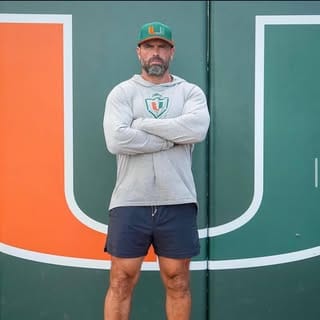
- Following 2.8K
- Followers 22.6K
- Engagement 4.05%
- Avg likes 1K
- Avg comments 24
About Nick Soto
Nick Soto (@nicksoto_performance) is a Sports & Fitness Instruction creator on Instagram, also filed under Fitness & Health. The account has 22,605 followers and 1,910 published posts. Recent posts average 1,039 likes and 24 comments, an engagement rate of 4.05%.
With 22.6K followers, Nick Soto is a micro creator by the common 10,000 to 100,000 definition. Nick Soto follows 2,824 accounts, so the audience is roughly 8 times the size of the list followed. Nick Soto carries Instagram's verified badge and uses an Instagram professional account. Flinque files Nick Soto under Sports & Fitness Instruction, with Fitness & Health as a secondary category.
The Instagram bio for Nick Soto runs to 13 words across 4 lines. The bio mentions @eliteuperformance and @gorillabaseballclub. The latest activity Flinque has on record for Nick Soto dates from September 2024.
Story Highlights
Unlocking shows the title and cover image of every story highlight this creator keeps pinned to the profile.
1,910 Posts
All 10 recent posts Flinque holds for Nick Soto are videos. Nick Soto has built a substantial archive of 1,910 posts. Against the audience, that is roughly 12 followers for each post published. Nick Soto also keeps 2 story highlights on the profile. All 10 carry captions, averaging 186 words each. The captions are written mainly in English. Words that recur across them include eccentric, these, power, athlete and body. The captions tag #canes, #baseballseason, #baseballtraining and #training.
He got a bit of a head start, but I’m gonna give it to his big ass!!! was flying. He also saved the team from having extra conditioning with this run, so clutch gene in there somewhere too…
1. Improve your sprinting mechanics. Most hammy injuries happen from poor sprint mechanics as the hamstring is exposed to rapid changes of stretching and recoiling. Also you must expose them to sprinting frequently for the same reason.
2. Keep from over exhaustion with too many sprints. Here’s the next way ppl strain hamstrings, from doing too many bouts of maximal intent. Like your capacity.
3. Find weight room exercises that specifically target the hamstrings’ ability to stretch and recoil at rapid rates and with a lot of force. These RDLs are one of the best movements you can do for that purpose.
In keeping with the AEL posts as of late (overloading the eccentric portion of the movement), here’s a version all of our athletes do. We want these to be done with a lot of rhythm and speed. Coach will overload the eccentric action by pushing down hard and fast on the way down only and releasing on the way up. This will add extra stress as the athlete works to rapidly switch into the concentric pull back up. Specifically training how the hamstring handles athletic movements.
Accentuated Eccentric Loading (AEL) training. Is done by overloading the eccentric portion of the lift and reducing resistance in the way back up. This has a few specific key benefits to adaptations athletes can really use for increased performance.
The previous reel focused on the what and how. Here I’ll get into some of the programming peculiarities and nuances.
For programming AELs we will usually fit it into a 3 week cycle or phase. Typically before we go into a dynamic iso phase. This follows sort of how we program thru a bastardized version of Triphasic training. 3 weeks seems to be the sweet spot where we get really good adaptations of it out it being too long where we need a longer reload to get the body back from the over stimulation of this phase. Keep in mind this is pretty taxing in the system. There are times where performance may drop slightly, but the rebound in performance when you climb out of it is well worth it. Not all athletes are the same, and some athletes may show immediate performance gains from this modality.
If you are a coach that likes to keep programming consistent thru a macro cycle you can throw these in within the micro cycle. You can do them later in the week in that case. If you do them in season maybe think of reversing that however, and do them soon after a game or series to have ample recovery before the next game or series. Things you can couple these with on other days on a micro cycle version could be dynamic ISOs, speed lifting session or RFD or power sessions, and we always love doing this with accommodated resistance (bands or chains). So one day of each.
But as I said I like doing these for 3 weeks straight. In that case we do some version of it at least 2 to 3 days a week. What it may look like is say a Bulgarian Split Squat version on a Monday, maybe RDL or Nordic version on a Tuesday, bilateral back squat version on a Thursday, then you can do a bench press and row version on Friday. That’s one example. Or you can do two on the same day, none on the next day then two again, see what works for your athletes.
Sets are 2 to 4, Reps are 3 to 6, and no more than 8. 8 is if you want to focus on mass.
Any athlete or coach wanting to get into the weeds of Accentuated Eccentric Loading (AELs) this video is a bit long, but it gets into detail as to how we program it, how we train it, and why it’s so effective.
The mechanical nature of AEL drills is pretty straightforward forward. You are overloading the eccentric portion of the movement with extra resistance to get a triggered response on both the negative and concentric parts of a movement. Muscles and tendons can take much more resistance during the lengthening phase of movement (the eccentric phase). So we simply take advantage of that nature and use it to develop very specific adaptations thru AELs. Most athletic movements require a strong ability to control and absorb the eccentric portion of that movement, and in most circumstances the eccentric portion is even more important to that movement’s success than the concentric part (which is what we typically does on in the performance world. On top of that, because the eccentric action is overloaded there is much more stimulus to the motor units and fibers themselves during an AEL, which leads to more output in the concentric part as well. This leads to more strength and power thru the whole rep and thru your whole system. The adaptations to AEL are very specific and very clear, which makes it a great choice of modality for certain athletes.
To execute these, there are a few ways to make it happen. Coach or partner, can add resistance on the way down by pushing in the bar or the exerciser directly, and then releasing on the way back up. The exerciser will resist strongly in the way down and then explode up forcefully when the resistor releases the increased resistance and goes back up. The tempo on the way down can vary with advanced versions being fast in the way down but under control of the resistance, and not allowing the body to collapse, to slower versions to really control the decent and add time under tension to the eccentric part. Another option is to reverse the resistance increase and overload the bar with super maximal weight (more than 1 RM) allow the athlete to lower by themselves then have Coach or partner assist on the way up.
Train ranges of motion with tension and force. You must be able to coordinate and engage stretched tissue for the day crease in flexibility to do anything for you from a performance standpoint.
So, heck yeah, train range of motion and mobility. But do it in a way that increases strength and power production, and doesn’t take away from it. Find ways to work mobility and strength together, or at least mobility and coordination. That’s the key to using increased range of motion for pitching harder. Not just getting more flexibility at the hips or groin or hamstrings, but having control and strength of those ranges.
With that comes coordination and control. A huge factor associated with pitching velo and arm health for throwers is hip shoulder separation. The issue is that most of hip shoulder separation, or the lack there of, comes down to an inability to coordinate the movement, and find the whipping effect from it. It is not usually a lack of flexibility from the hips to the shoulder. For the actual whipping motion to be effective there must be pre tension and recoil and spring for its effect to occur. And of course, a ton of ground forces too! Same with block leg mechanics. Yes the hamstring of the lead leg must be flexible to allow the body to come over it forcefully. But the coordination of straightening the knee and the stoping power of the leg and hip of the lead leg is every bit as critical and it must be able to do it while being stretched. That’s the essence of eccentric power and dynamic stability. And these principles must be trained.
And by the way, this post is not about knocking any one coach or any one athlete that wants to establish better flexibility. Our goal isn’t to point any one person out in any way. It’s about understanding what works and what doesn’t and why. And where time and energy should be spent to make a real change. It’s about hopefully causing thought and progress to thin the community as a whole.
We find that exposure to the ground builds strength in the feet that you cannot get any other way. It also bring back proprioception of the foot and ankle so that the body understand better where it is at all times in relation to the ground, almost reeducating sensory units and the system as a whole really. This will add coordination and timing and balance to your movements.
Here’s something else to think about most shoes and most cleats have some sort of heel lift, some have a lot. So everything you do with those shoes is encouraging the Achilles tendon to shorten. Not stiffen, shorten. There’s a big and important distinction between the two. Building tendon stiffness gives us spring and power. Shortening the tendon greatly reduces and inhibits strength,power, and mobility. Exposing the feet to more barefoot training can help offset this condition.
So if you want to be a superior athlete try training on bare feet more often.
As you can see these guys bring it every single day. Success is earned.
#canes #baseballseason #baseballtraining #training
Nick Soto's engagement
Nick Soto's engagement rate on Instagram is 4.05%, between 3% and 6%, or 3 to 6 likes and comments per 100 followers. On a typical post that comes to about 1 like or comment for every 25 followers. An average post collects 1,039 likes and 24 comments, close to 43 likes for each comment.
Engagement rate
4.05%
- Avg likes
- 1K
- Avg comments
- 24
- Interactions : followers
- 1 : 25
Lookalike Creators
A free account lists creators whose audiences behave like this one, ready to shortlist and compare side by side.
Age & Gender
Unlocking shows how this audience splits across age bands and gender, charted from follower data.
Audience Location
Unlocking reveals the countries and cities where the most active followers of this account are concentrated.
Primary Language
Unlocking shows the languages this audience uses most in comments, interactions and the content it consumes.
Audience Interests
Unlocking lists the topics and categories this audience follows and engages with most often across the platform.
Authenticity
Unlocking scores how genuine the audience is, flagging fake, inactive or bot followers found in engagement patterns.
Audience Quality Score
Unlocking gives one overall audience quality score combining authenticity, engagement, follower activity and audience relevance.
Brand Affinity
Unlocking names the brands this audience already follows, mentions or engages with across social platforms.
Content Strategy
Unlocking breaks down the content pillars, tone and visual style this creator uses, and which formats perform best.
Commercial Insights
Unlocking shows collaboration types, an estimated pricing tier and a brand safety risk read for sponsored campaigns.
Industry Fit
Unlocking rates how well this creator and audience align with specific industry verticals and brand categories.
Research Nick Soto further
Flinque ranks Instagram creators in Sports & Fitness Instruction and Fitness & Health, categories Nick Soto is filed under, and its free tools measure the same figures for any public account.
Related rankings
Frequently asked questions
These answers about Nick Soto are generated from the Instagram profile data Flinque holds for the account.
Who is Nick Soto?
Nick Soto (@nicksoto_performance) is a Sports & Fitness Instruction creator on Instagram, also filed under Fitness & Health. Nick Soto carries Instagram's verified badge and uses an Instagram professional account. The Instagram bio for Nick Soto runs to 13 words across 4 lines.
How many followers does Nick Soto have?
Nick Soto has 22,605 followers on Instagram (22.6K). Nick Soto follows 2,824 accounts, so the audience is roughly 8 times the size of the list followed. Nick Soto has built a substantial archive of 1,910 posts.
What is Nick Soto's engagement rate?
Nick Soto's engagement rate on Instagram is 4.05%, between 3% and 6%, or 3 to 6 likes and comments per 100 followers. On a typical post that comes to about 1 like or comment for every 25 followers. An average post collects 1,039 likes and 24 comments, close to 43 likes for each comment.
What does Nick Soto post about on Instagram?
Flinque files Nick Soto under Sports & Fitness Instruction, with Fitness & Health as a secondary category. All 10 recent posts Flinque holds for Nick Soto are videos. The 10 recent Instagram captions Flinque holds for Nick Soto repeatedly use the words eccentric, these, power, athlete and body. Nick Soto's captions carry hashtags such as #canes, #baseballseason and #baseballtraining. Nick Soto writes those captions mainly in English. Nick Soto keeps 2 story highlights, which open with a free Flinque account.
How do I contact Nick Soto for a collaboration?
Nick Soto's contact details are not published on Flinque's public profile. The Instagram bio links to 2 external sites, and a free Flinque account opens those links. Brands with a free Flinque account can shortlist Nick Soto and use Flinque's outreach tools wherever a contact route is on file.
Links
Nick Soto's own Instagram profile is the one outbound link Flinque publishes for the account, and the 2 bio links open after signing up.
Public profile data sourced from Instagram. Flinque is not affiliated with Nick Soto.