- Following 1.7K
- Followers 9K
- Engagement 2%
- Avg likes 195
- Avg comments 7
About Gabriella Demczukغبرييلا دمشوك
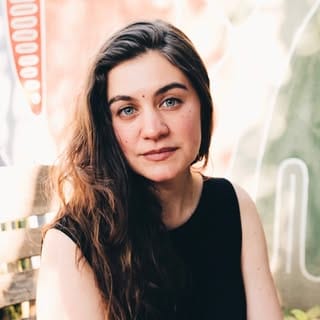
Gabriella Demczukغبرييلا دمشوك (@gdemczuk) is an Artist creator on Instagram, also filed under Music & Artists. The account has 9,028 followers and 358 published posts. Recent posts average 195 likes and 7 comments, an engagement rate of 2%.
Gabriella Demczukغبرييلا دمشوك belongs to the nano tier, the band usually drawn between 1,000 and 10,000 followers. Gabriella Demczukغبرييلا دمشوك follows 1,738 accounts, so the audience is roughly 5.2 times the size of the list followed. Gabriella Demczukغبرييلا دمشوك is set up as an Instagram business account. Flinque files Gabriella Demczukغبرييلا دمشوك under Artist, with Music & Artists as a secondary category.
The Instagram bio for Gabriella Demczukغبرييلا دمشوك runs to 16 words across 4 lines. The bio mentions @insidenatgeo, @alwahat.collective, @rca.mediastudies and @ea_rca. The latest activity Flinque has on record for Gabriella Demczukغبرييلا دمشوك dates from May 2025.
358 Posts
All 10 recent posts Flinque holds for Gabriella Demczukغبرييلا دمشوك are carousels. 358 published posts give Gabriella Demczukغبرييلا دمشوك a moderate archive on Instagram. Against the audience, that is roughly 25 followers for each post published. All 10 carry captions, averaging 144 words each. The captions are written mainly in English. Words that recur across them include through, these, which, material and cochineal.
RS6 is led by Gabriella Demczuk and Kamil Dalkir
Tuesday 3 February 6-7pm CET
In the next session, we will turn to the many forms of intelligence that emerge through more-than-human collaboration, with plants as a key protagonist. From animal health-seeking strategies observed in pastoralist communities to the entangled histories of cacti and insects as symbols of invasion and resilience, living systems form a continuous reservoir of survival practices and mutual dependence. We examine how these relationships are shaped by both digital and analogue media landscapes, and how they are constrained or disrupted by past and present political, environmental, and social conditions.
Together with artist Gabriella Demczuk and ethnobiologist Emiel De Meyer, we will explore how knowledge circulates across species and forms of life, and what is gained or lost along the way. We will discuss how biological patenting forecloses alternative plant futures or how traditional medicinal wisdoms persist through online discussion forums. Rather than approaching intelligence as an exclusively human attribute, the session asks what more-than-human knowledge can teach us about collaboration, responsibility, and co-existence today.
“Seeding Kinships” is an online series of public lectures and conversations curated by as part of Free Radicals. Fortnightly on Tuesday evenings (CET) from 20 January to 31 March 2026.
More information and registration on the link in bio.
Free Radicals is a two-year research project exploring the intersections between plant biodiversity and artistic practice, co-funded by and.
Using the cochineal dye, we create a base layer for the images to reveal themselves. Layering fabrics, we continue the ritual of tying torn fabric to the sacred tree in an act of prayer, once practiced by local villagers seeking safety and good fortune. wove cactus fibres together to create sculptural works and made beautiful paper out of these fibres, which were printed with ink, also made from the cochineal, expanding on the myths of these two beings. designed a stunning book that brings together different recipes, instructions and texts that have been shared with us throughout the three years of learning from different artisans of their use of the cactus and cochineal. A two-channel visual essay documents the flags we made with residents of Ein Qiniya, which Suha masterfully embroiders with threads dyed from the cochineal.
While working, we’ve come to realize these artistic interventions can also be acts of care and repair - collecting cochineal that is eating the cactus, pruning the pads and collecting dried fibers- help the cactus to thrive and survive, keeping alive the memories and histories of the Palestinians that once planted these cactus hedges.
1-Antonio Cortes, “Sierra Nevada,” archival images, cyanotype and cochineal on wool, 2024
2-Changer Song, “One Hour,” lumen prints, cigarette leachate, 2024
3-Georgina Docherty, “The Weight of Water,” salt prints, 2024
4-Ioana Oprescu, “One Hundred Red Onions,” archival images, red onion photo developer, 2024
5-Maya Vahidi, “The Hands that Harvest,” saffron chemigram, photogram, and phytogram artist book, 2024
6-Yu Huang, “The Curse of the Bamboo Flowers,“ archival images, cyanotype on glass, 2024
7-Jennifer Brown, “Humanity’s Favorite Fruit?” Cyanotype, tomato toning, 2024
8-Boris Martic, “ Air Mapping,“ Lichen prints, 2023
9-Francesca Moseley, “Warning Weeds,” Gloucester Cathedral by William Turner, cyanotype and weed toning, 2023
10-Georgina Grantham, “London Clay,” Archival Lithographic prints on clay slabs, tunnel book, 2023
11-Jiayi Tang, “ Chromatographic Exploration,” Soil Chromatography, 2023
12-Katy Hughes, “The Peppered Moth,” Carbon soot printing, flip book, 2023
13-Olivia Baylis, “Cotton/Water/Dye,” natural dye and printing, 2023
14-Teng Wang, “The Cycle of Life,” Photograms and bread fermentation, 2023
15-Yingxin Zhang, “Metamorphisis,” British Algae by Anna Atkins, cyanotypes with collected river water, 2023
This is the first time I have written about what I do as a photographer, which you can read at the link in my bio. A big thank you to the Avery team for working with me through these many months of writing and editing, and to my editor and friend Ariel Zambelich who has worked with me all these years to think through my own framing and to my friend Stephen Crowley who taught me very early on to see beyond the “smoke filled rooms of Washington.”
The Harris/Walz election night watch party at Howard University photographed for TIME
Gabriella Demczukغبرييلا دمشوك's engagement
Gabriella Demczukغبرييلا دمشوك's engagement rate on Instagram is 2%, between 1% and 3%, or 1 to 3 likes and comments per 100 followers. On a typical post that comes to about 1 like or comment for every 50 followers. An average post collects 195 likes and 7 comments, close to 28 likes for each comment.
Engagement rate
2%
- Avg likes
- 195
- Avg comments
- 7
- Interactions : followers
- 1 : 50
Lookalike Creators
A free account lists creators whose audiences behave like this one, ready to shortlist and compare side by side.
Age & Gender
Unlocking shows how this audience splits across age bands and gender, charted from follower data.
Audience Location
Unlocking reveals the countries and cities where the most active followers of this account are concentrated.
Primary Language
Unlocking shows the languages this audience uses most in comments, interactions and the content it consumes.
Audience Interests
Unlocking lists the topics and categories this audience follows and engages with most often across the platform.
Authenticity
Unlocking scores how genuine the audience is, flagging fake, inactive or bot followers found in engagement patterns.
Audience Quality Score
Unlocking gives one overall audience quality score combining authenticity, engagement, follower activity and audience relevance.
Brand Affinity
Unlocking names the brands this audience already follows, mentions or engages with across social platforms.
Content Strategy
Unlocking breaks down the content pillars, tone and visual style this creator uses, and which formats perform best.
Commercial Insights
Unlocking shows collaboration types, an estimated pricing tier and a brand safety risk read for sponsored campaigns.
Industry Fit
Unlocking rates how well this creator and audience align with specific industry verticals and brand categories.
Research Gabriella Demczukغبرييلا دمشوك further
Flinque ranks Instagram creators in Artist and Music & Artists, categories Gabriella Demczukغبرييلا دمشوك is filed under, and its free tools measure the same figures for any public account.
Related rankings
Frequently asked questions
These answers about Gabriella Demczukغبرييلا دمشوك are generated from the Instagram profile data Flinque holds for the account.
Who is Gabriella Demczukغبرييلا دمشوك?
Gabriella Demczukغبرييلا دمشوك (@gdemczuk) is an Artist creator on Instagram, also filed under Music & Artists. Gabriella Demczukغبرييلا دمشوك is set up as an Instagram business account. The Instagram bio for Gabriella Demczukغبرييلا دمشوك runs to 16 words across 4 lines.
How many followers does Gabriella Demczukغبرييلا دمشوك have?
Gabriella Demczukغبرييلا دمشوك has 9,028 followers on Instagram (9K). Gabriella Demczukغبرييلا دمشوك follows 1,738 accounts, so the audience is roughly 5.2 times the size of the list followed. 358 published posts give Gabriella Demczukغبرييلا دمشوك a moderate archive on Instagram.
What is Gabriella Demczukغبرييلا دمشوك's engagement rate?
Gabriella Demczukغبرييلا دمشوك's engagement rate on Instagram is 2%, between 1% and 3%, or 1 to 3 likes and comments per 100 followers. On a typical post that comes to about 1 like or comment for every 50 followers. An average post collects 195 likes and 7 comments, close to 28 likes for each comment.
What does Gabriella Demczukغبرييلا دمشوك post about on Instagram?
Flinque files Gabriella Demczukغبرييلا دمشوك under Artist, with Music & Artists as a secondary category. All 10 recent posts Flinque holds for Gabriella Demczukغبرييلا دمشوك are carousels. The 10 recent Instagram captions Flinque holds for Gabriella Demczukغبرييلا دمشوك repeatedly use the words through, these, which, material and cochineal. Gabriella Demczukغبرييلا دمشوك writes those captions mainly in English.
How do I contact Gabriella Demczukغبرييلا دمشوك for a collaboration?
Gabriella Demczukغبرييلا دمشوك's contact details are not published on Flinque's public profile. The Instagram bio links to 1 external site, and a free Flinque account opens that link. The account is registered as an Instagram business account. Brands with a free Flinque account can shortlist Gabriella Demczukغبرييلا دمشوك and use Flinque's outreach tools wherever a contact route is on file.
Links
Gabriella Demczukغبرييلا دمشوك's own Instagram profile is the one outbound link Flinque publishes for the account, and the bio link opens after signing up.
Public profile data sourced from Instagram. Flinque is not affiliated with Gabriella Demczukغبرييلا دمشوك.