- Following 3.1K
- Followers 20.3K
- Engagement 1.2%
- Avg likes 270
- Avg comments 9
About Fred Kuwornu
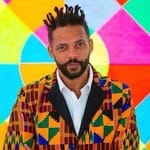
Fred Kuwornu (@fredkuwornu) is an Artist creator on Instagram, also filed under Art & DIY. The account has 20,327 followers and 222 published posts. Recent posts average 270 likes and 9 comments, an engagement rate of 1.2%.
With 20.3K followers, Fred Kuwornu is a micro creator by the common 10,000 to 100,000 definition. Fred Kuwornu follows 3,140 accounts, so the audience is roughly 6.5 times the size of the list followed. Fred Kuwornu carries Instagram's verified badge and uses an Instagram professional account. Flinque files Fred Kuwornu under Artist, with Art & DIY as a secondary category.
The Instagram bio for Fred Kuwornu runs to 15 words. The bio mentions @labiennale. The latest activity Flinque has on record for Fred Kuwornu dates from October 2026.
222 Posts
Of the 10 most recent posts shown for Fred Kuwornu, 8 are single images, 1 is a video and 1 is a carousel. That mix leans toward single images. 222 published posts give Fred Kuwornu a moderate archive on Instagram. Against the audience, that is roughly 92 followers for each post published. All 10 carry captions, averaging 189 words each. The captions are written mainly in English. Words that recur across them include renaissance, black, history, exhibition and film. The captions tag #blackhistory, #art, #renaissance, #renaissanceart and #wewerehere.
📸 The scribe, pen in hand, part of the story we're telling.
Photo credit: Stefano Giacomini
We Were Here: The Untold History of Black Africans in Renaissance Europe was exhibited at the Central Pavilion of the 60th International Art Exhibition of La Biennale di Venezia (2024) and was officially eligible for Best Documentary Feature at the 98th Academy Awards.
Behind the camera: a huge thank you to the whole crew who always collaborated on this project, produced by Do The Right Films, including Director of Photography Luigi Benvisto and the team of Cantieri Meticci di Bologna.
We Were Here was shot across several European countries, in different languages, all coming together in one historical reconstruction.
Want to know more about the film? More info:
Follow:,
#WeWereHere #BehindTheScenes #BlackHistory #Renaissance #Art
From the late Middle Ages, and particularly during the Renaissance, one of the Magi, usually identified as Balthazar, was increasingly represented as a Black African king. One of the most striking examples is Hieronymus Bosch's Adoration of the Magi, today held by the Museo del Prado in Madrid, where Balthazar appears as a richly dressed Black king at the very center of the composition. These images placed African figures at the heart of one of Christianity's most important narratives, while revealing changing European ideas about Africa, race, geography, royalty and Christianity.
This recurring motif, a Black king at the center of Christian art for centuries, is one of the visual traditions we wanted to explore and tell in 𝗪𝗲 𝗪𝗲𝗿𝗲 𝗛𝗲𝗿𝗲: 𝗧𝗵𝗲 𝗨𝗻𝘁𝗼𝗹𝗱 𝗛𝗶𝘀𝘁𝗼𝗿𝘆 𝗼𝗳 𝗕𝗹𝗮𝗰𝗸 𝗔𝗳𝗿𝗶𝗰𝗮𝗻𝘀, a film directed by Fred Kudjo Kuwornu, produced by Do The Right Films, exhibited in the Central Pavilion, curated by Adriano Pedrosa, as part of the main exhibition Foreigners Everywhere, at the 60th International Art Exhibition of the Venice Biennale.
𝗠𝗼𝗿𝗲 𝗶𝗻𝗳𝗼:
𝗕𝗿𝗶𝗻𝗴 𝘁𝗵𝗲 𝗳𝗶𝗹𝗺 to your audience, your city:
Follow:,
#BlackHistory #RenaissanceArt #History #Art #BlackHistoryMonth
This is at the heart of We Were Here: The Untold History of Black Africans in Renaissance Europe, exhibited at the Central Pavilion of the 60th International Art Exhibition of La Biennale di Venezia (2024) and officially eligible for Best Documentary Feature at the 98th Academy Awards.
Since then, the film has been on a journey of around 100 screenings between museums and universities, among them the National Gallery in London, and is now visible in the UK, in the Netherlands and in Sweden.
📍 Liverpool, 13 October
📍 Manchester, 14 October
📍 Edinburgh, 16 October
📍 Nottingham, 19 October
📍 London, University of London, 20 October
📍 Coventry, 21 October
📍 London, 22 October
📍 Amsterdam, Netherlands, 27 October
📍 Gothenburg, Sweden, 5 November
📍 Stockholm, Sweden, 6 November
Want to bring We Were Here to your museum, university or cultural institution? Screenings can be organised through Do The Right Films, find out more at
Follow:,
#blackhistory #history #renaissance #art #renaissanceart
This is a glimpse of what it took behind the scenes to bring We Were Here to life, from lighting setups to quiet moments between takes.
We Were Here: The Untold History of Black Africans in Renaissance Europe was exhibited at the Central Pavilion of the 60th International Art Exhibition of La Biennale di Venezia (2024) and was officially eligible for Best Documentary Feature at the 98th Academy Awards (2026).
A huge thank you to the whole crew who always collaborated on this project, produced by Do The Right Films, including Director of Photography Luigi Benvisto and the team of Cantieri Meticci di Bologna.
Some of the film's reconstruction scenes were shot in Bologna, Italy, at Spazio MET, the home of Cantieri Meticci, a cultural NGO whose mission is to build inclusion and intercultural exchange through theatre and the arts. Spazio MET is a former warehouse regenerated around the idea of reuse and recycling, now hosting festivals, performances and intercultural evenings that help bring stories like this one to a wider audience.
We Were Here was shot across several European countries, in different languages, all coming together in one historical reconstruction.
Want to know more about the film? More info:
Follow:,
#WeWereHere #BehindTheScenes #BlackHistory #Renaissance #Art
📸 Two members of the crew, between setups.
Photo credit: Stefano Giacomini
We Were Here: The Untold History of Black Africans in Renaissance Europe was exhibited at the Central Pavilion of the 60th International Art Exhibition of La Biennale di Venezia (2024) and was officially eligible for Best Documentary Feature at the 98th Academy Awards.
Behind the camera: a huge thank you to the whole crew who always collaborated on this project, produced by Do The Right Films, including Director of Photography Luigi Benvisto and the team of Cantieri Meticci di Bologna.
We Were Here was shot across several European countries, in different languages, all coming together in one historical reconstruction.
Want to know more about the film? More info:
Follow:,
#WeWereHere #BehindTheScenes #BlackHistory #Renaissance #Art
This mixed-media piece, part of the 𝗪𝗲 𝗪𝗲𝗿𝗲 𝗛𝗲𝗿𝗲 exhibition, gathers details from Renaissance portraits, the same Black figures explored throughout this project, alongside maps of Spain, Italy and the Mediterranean and handwritten anti-racism protest signs, all held together by a strand of Bodom beads, prized Ghanaian glass beads traditionally tied to lineage, status and spiritual protection. The idea behind it: every individual carries a story worth recovering, hidden inside the larger frame of History, and reassembling these fragments, Renaissance faces and contemporary ones, into one object is a way of making that presence visible again.
The use of the frame itself as a device, deciding what is shown and what is left out, echoes John Berger's pioneering Ways of Seeing, the BBC series that first turned the frame into a question rather than just a border.
This same instinct, pulling individual lives back out of the margins of history, is what 𝗪𝗲 𝗪𝗲𝗿𝗲 𝗛𝗲𝗿𝗲: 𝗧𝗵𝗲 𝗨𝗻𝘁𝗼𝗹𝗱 𝗛𝗶𝘀𝘁𝗼𝗿𝘆 𝗼𝗳 𝗕𝗹𝗮𝗰𝗸 𝗔𝗳𝗿𝗶𝗰𝗮𝗻𝘀 was made to do, a film directed by Fred Kudjo Kuwornu, produced by Do The Right Films, exhibited in the Central Pavilion, curated by Adriano Pedrosa, as part of the main exhibition Foreigners Everywhere, at the 60th International Art Exhibition of the Venice Biennale.
𝗠𝗼𝗿𝗲 𝗶𝗻𝗳𝗼:
𝗕𝗿𝗶𝗻𝗴 𝘁𝗵𝗲 𝗳𝗶𝗹𝗺 to your audience, your city:
Follow:,
#BlackHistory #RenaissanceArt #History #Art #BlackHistoryMonth
Andrea Mantegna painted this Adoration of the Magi around 1462 to 1464 for the Gonzaga family chapel in Mantua. It's the central panel of a triptych, now reunited with its two side panels at the Uffizi Galleries in Florence. One of the three kings is traditionally identified as a Black African ruler, part of Mantegna's attempt to paint the three known continents of his age.
It wasn't a rare choice for painters at the time.
𝗪𝗲 𝗪𝗲𝗿𝗲 𝗛𝗲𝗿𝗲: 𝗧𝗵𝗲 𝗨𝗻𝘁𝗼𝗹𝗱 𝗛𝗶𝘀𝘁𝗼𝗿𝘆 𝗼𝗳 𝗕𝗹𝗮𝗰𝗸 𝗔𝗳𝗿𝗶𝗰𝗮𝗻𝘀, produced by Do The Right Films and directed by artist and filmmaker Fred Kudjo Kuwornu, retraces the African presence in 14th, 15th and 16th century Europe through interviews with art historians, curators and cultural activists, and through Renaissance masterpieces held in the world's most important museums. A work that would not have been possible without the many historians who have spent over thirty years researching these themes, whom we thank, both those who took part in the documentary and those who did not.
We Were Here was exhibited in the Central Pavilion of the 60th International Art Exhibition of the Venice Biennale (2024), curated by Adriano Pedrosa, and was officially eligible for Best Documentary Feature at the 98th Academy Awards.
The film is currently on tour in museums, universities and cultural spaces across Europe and North America.
More info:
Want to bring the film to your city? Write to
Follow:,
#Art #ArtHistory #RenaissanceArt #RenaissanceHistory #BlackHistory
The award-winning documentary film, ‘We Were Here’, by highlighted the significant presence of Black and African people in artistic masterpieces of the Renaissance Europe era.
The audience appreciated the educational and intentional theme throughout the film. Thank you again and everyone who attended and supported 🎉
Make sure to catch ‘We Were Here’ at the next available screening!
#blackhistorymonthuk
I still remember the first time I visited the National Gallery, during my very first trip to London in 1997. Back then, I could never have imagined that one day I would become a documentary filmmaker, let alone that I would bring one of my films into this beautiful and extraordinary space. Tonight I will join the conversation with Dr. Miranda Kaufmann and Dr. Leslie Primo two great art historian and historia. Such as great conversation.
For tickets, click the link here.:
Fred Kuwornu's engagement
Fred Kuwornu's engagement rate on Instagram is 1.2%, between 1% and 3%, or 1 to 3 likes and comments per 100 followers. On a typical post that comes to about 1 like or comment for every 83 followers. An average post collects 270 likes and 9 comments, close to 30 likes for each comment.
Engagement rate
1.2%
- Avg likes
- 270
- Avg comments
- 9
- Interactions : followers
- 1 : 83
Lookalike Creators
A free account lists creators whose audiences behave like this one, ready to shortlist and compare side by side.
Age & Gender
Unlocking shows how this audience splits across age bands and gender, charted from follower data.
Audience Location
Unlocking reveals the countries and cities where the most active followers of this account are concentrated.
Primary Language
Unlocking shows the languages this audience uses most in comments, interactions and the content it consumes.
Audience Interests
Unlocking lists the topics and categories this audience follows and engages with most often across the platform.
Authenticity
Unlocking scores how genuine the audience is, flagging fake, inactive or bot followers found in engagement patterns.
Audience Quality Score
Unlocking gives one overall audience quality score combining authenticity, engagement, follower activity and audience relevance.
Brand Affinity
Unlocking names the brands this audience already follows, mentions or engages with across social platforms.
Content Strategy
Unlocking breaks down the content pillars, tone and visual style this creator uses, and which formats perform best.
Commercial Insights
Unlocking shows collaboration types, an estimated pricing tier and a brand safety risk read for sponsored campaigns.
Industry Fit
Unlocking rates how well this creator and audience align with specific industry verticals and brand categories.
Research Fred Kuwornu further
Flinque ranks Instagram creators in Art & DIY, categories Fred Kuwornu is filed under, and its free tools measure the same figures for any public account.
Related rankings
Frequently asked questions
These answers about Fred Kuwornu are generated from the Instagram profile data Flinque holds for the account.
Who is Fred Kuwornu?
Fred Kuwornu (@fredkuwornu) is an Artist creator on Instagram, also filed under Art & DIY. Fred Kuwornu carries Instagram's verified badge and uses an Instagram professional account. The Instagram bio for Fred Kuwornu runs to 15 words.
How many followers does Fred Kuwornu have?
Fred Kuwornu has 20,327 followers on Instagram (20.3K). Fred Kuwornu follows 3,140 accounts, so the audience is roughly 6.5 times the size of the list followed. 222 published posts give Fred Kuwornu a moderate archive on Instagram.
What is Fred Kuwornu's engagement rate?
Fred Kuwornu's engagement rate on Instagram is 1.2%, between 1% and 3%, or 1 to 3 likes and comments per 100 followers. On a typical post that comes to about 1 like or comment for every 83 followers. An average post collects 270 likes and 9 comments, close to 30 likes for each comment.
What does Fred Kuwornu post about on Instagram?
Flinque files Fred Kuwornu under Artist, with Art & DIY as a secondary category. Of the 10 most recent posts shown for Fred Kuwornu, 8 are single images, 1 is a video and 1 is a carousel. The 10 recent Instagram captions Flinque holds for Fred Kuwornu repeatedly use the words renaissance, black, history, exhibition and film. Fred Kuwornu's captions carry hashtags such as #blackhistory, #art and #renaissance. Fred Kuwornu writes those captions mainly in English.
How do I contact Fred Kuwornu for a collaboration?
Fred Kuwornu's contact details are not published on Flinque's public profile. The Instagram bio links to 3 external sites, and a free Flinque account opens those links. Brands with a free Flinque account can shortlist Fred Kuwornu and use Flinque's outreach tools wherever a contact route is on file.
Links
Fred Kuwornu's own Instagram profile is the one outbound link Flinque publishes for the account, and the 3 bio links open after signing up.
Public profile data sourced from Instagram. Flinque is not affiliated with Fred Kuwornu.