- Following 97
- Followers 9.7K
- Engagement 1.77%
- Avg likes 119
- Avg comments 72
About Dr. Wyatt Decker
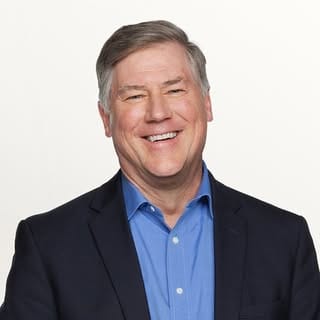
Dr. Wyatt Decker (@dr_wyatt_decker) is a Doctor creator on Instagram, also filed under Healthcare. The account has 9,654 followers and 23 published posts. Recent posts average 119 likes and 72 comments, an engagement rate of 1.77%.
Dr. Wyatt Decker belongs to the nano tier, the band usually drawn between 1,000 and 10,000 followers. Set against 97 accounts followed, the audience works out to about 100 followers per account Dr. Wyatt Decker follows. Dr. Wyatt Decker carries Instagram's verified badge and is set up as an Instagram business account. Flinque files Dr. Wyatt Decker under Doctor, with Healthcare as a secondary category.
The Instagram bio for Dr. Wyatt Decker runs to 18 words. The bio mentions @optum, @mayoclinic and @UnitedHealthGroup. The latest activity Flinque has on record for Dr. Wyatt Decker dates from May 2026.
23 Posts
Of the 10 most recent posts shown for Dr. Wyatt Decker, 9 are videos and 1 is a carousel. That mix leans toward videos. Dr. Wyatt Decker has a short publishing history, with 23 posts on Instagram. Against the audience, that is roughly 420 followers for each post published. All 10 carry captions, averaging 91 words each. The captions are written mainly in English. Words that recur across them include care, health, system, access and patients. The captions tag #matchday.
Does that mean AI will replace your emergency physician? Hardly. More likely, it will become a supporter and partner as human doctors evaluate the person in front of them.
That’s the focus: simplifying and standardizing the process, reducing unnecessary steps, and using automation to enable faster, more consistent decisions — so clinicians can stay focused on care and patients can move forward without delays.
This just underscores how access to care is one of the biggest challenges facing rural communities in America today. Fortunately, telehealth, digital tools and home visits are closing some of those gaps and helping rural clinics with specialty expertise.
But beyond the intensity of the ER, the show pulls back the curtain on how emergency physicians are forced to absorb the flaws of the U.S. health system.
You see it in the patients that show up: A young man in psychiatric crisis who ends up boarding in the ER. The man who arrives in diabetic ketoacidosis because he has been rationing insulin. The homeless alcoholic who becomes a beloved reoccurring character after repeated trips to the ER.
Emergency departments are not designed to be the primary access point to health care, yet they have become exactly that. It doesn't have to be that way.
There's a way forward: Move from a volume-based system to one that pays for quality outcomes. Doing so will deliver the right care at the right time and help control the rising costs we see for health care services.
This news probably doesn’t come as a big surprise. The real question is: how do we make it better? I believe the answer lies in reshaping the current health system to focus much more on intervening earlier and identifying diseases sooner to give people a chance at a longer, healthier life.
Congratulations to everyone beginning this next chapter. Enjoy the journey. #MatchDay
It also raised a bigger question for me: how do we democratize this kind of care so it isn’t the exception, but the expectation? That question continues to fuel my passion and the work ahead.
When people can’t access timely primary care, specialty care, or pharmacy support, the ER becomes the default. The result? Longer waits and more preventable crises.
Better access earlier means fewer emergencies later.
Strengthen access upstream.
Relieve pressure downstream.
Primary care plays a critical role in transitioning the U.S. health care system from volume-based to value-based care and is often the first line of defense for managing complex care conditions. However, the U.S. is projected to face a shortage of 86,000 physicians by 2036 – and nearly half will be primary care physicians.
Experts from leading health care organizations discussed ways to encourage primary care as a purpose-driven career, explored compensation and payment models that reflect the value that the primary care workforce provides to our health system, and underscored the need for team-based approaches to patient care.
We can't transform health care without transforming how we support the primary care workforce.
A special thank you to my fellow participants who attended the convening: Mara McDermott from Accountable for Health; from; Karen Johnson from the; from the; Dr. Brad Goettl from the; Danielle Turnipseed from the; Dr. Ken Cohen from the Health Care Transformation Hub; Theresa Dreyer from the Health Care Transformation Task Force; Maria Ghazal from the Healthcare Leadership Council; Dr. Jim Whitfill from and; and Emily Brower from the National Association of ACOs (NAACO).
Learn more about our work by clicking the link in my bio.
Dr. Wyatt Decker's engagement
Dr. Wyatt Decker's engagement rate on Instagram is 1.77%, between 1% and 3%, or 1 to 3 likes and comments per 100 followers. On a typical post that comes to about 1 like or comment for every 56 followers. Comments stay close to likes on Dr. Wyatt Decker's posts, at 119 likes and 72 comments on average, about 1.7 likes per comment.
Engagement rate
1.77%
- Avg likes
- 119
- Avg comments
- 72
- Interactions : followers
- 1 : 56
Lookalike Creators
A free account lists creators whose audiences behave like this one, ready to shortlist and compare side by side.
Age & Gender
Unlocking shows how this audience splits across age bands and gender, charted from follower data.
Audience Location
Unlocking reveals the countries and cities where the most active followers of this account are concentrated.
Primary Language
Unlocking shows the languages this audience uses most in comments, interactions and the content it consumes.
Audience Interests
Unlocking lists the topics and categories this audience follows and engages with most often across the platform.
Authenticity
Unlocking scores how genuine the audience is, flagging fake, inactive or bot followers found in engagement patterns.
Audience Quality Score
Unlocking gives one overall audience quality score combining authenticity, engagement, follower activity and audience relevance.
Brand Affinity
Unlocking names the brands this audience already follows, mentions or engages with across social platforms.
Content Strategy
Unlocking breaks down the content pillars, tone and visual style this creator uses, and which formats perform best.
Commercial Insights
Unlocking shows collaboration types, an estimated pricing tier and a brand safety risk read for sponsored campaigns.
Industry Fit
Unlocking rates how well this creator and audience align with specific industry verticals and brand categories.
Research Dr. Wyatt Decker further
Flinque ranks Instagram creators in Doctor and Healthcare, categories Dr. Wyatt Decker is filed under, and its free tools measure the same figures for any public account.
Related rankings
Frequently asked questions
These answers about Dr. Wyatt Decker are generated from the Instagram profile data Flinque holds for the account.
Who is Dr. Wyatt Decker?
Dr. Wyatt Decker (@dr_wyatt_decker) is a Doctor creator on Instagram, also filed under Healthcare. Dr. Wyatt Decker carries Instagram's verified badge and is set up as an Instagram business account. The Instagram bio for Dr. Wyatt Decker runs to 18 words.
How many followers does Dr. Wyatt Decker have?
Dr. Wyatt Decker has 9,654 followers on Instagram (9.7K). Set against 97 accounts followed, the audience works out to about 100 followers per account Dr. Wyatt Decker follows. Dr. Wyatt Decker has a short publishing history, with 23 posts on Instagram.
What is Dr. Wyatt Decker's engagement rate?
Dr. Wyatt Decker's engagement rate on Instagram is 1.77%, between 1% and 3%, or 1 to 3 likes and comments per 100 followers. On a typical post that comes to about 1 like or comment for every 56 followers. Comments stay close to likes on Dr. Wyatt Decker's posts, at 119 likes and 72 comments on average, about 1.7 likes per comment.
What does Dr. Wyatt Decker post about on Instagram?
Flinque files Dr. Wyatt Decker under Doctor, with Healthcare as a secondary category. Of the 10 most recent posts shown for Dr. Wyatt Decker, 9 are videos and 1 is a carousel. The 10 recent Instagram captions Flinque holds for Dr. Wyatt Decker repeatedly use the words care, health, system, access and patients. Dr. Wyatt Decker's captions carry hashtags such as #matchday. Dr. Wyatt Decker writes those captions mainly in English.
How do I contact Dr. Wyatt Decker for a collaboration?
Dr. Wyatt Decker's contact details are not published on Flinque's public profile. The Instagram bio links to 1 external site, and a free Flinque account opens that link. The account is registered as an Instagram business account. Brands with a free Flinque account can shortlist Dr. Wyatt Decker and use Flinque's outreach tools wherever a contact route is on file.
Links
Dr. Wyatt Decker's own Instagram profile is the one outbound link Flinque publishes for the account, and the bio link opens after signing up.
Public profile data sourced from Instagram. Flinque is not affiliated with Dr. Wyatt Decker.