- Following 970
- Followers 19.2K
- Engagement 2.91%
- Avg likes 553
- Avg comments 86
About Ľud ~ Neuroscientist
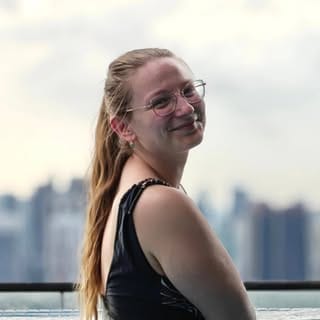
Ľud ~ Neuroscientist (@computational_neuroscientist) is an Education creator on Instagram, also filed under Education & Career and Medical & Health. The account has 19,243 followers and 288 published posts. Recent posts average 553 likes and 86 comments, an engagement rate of 2.91%.
With 19.2K followers, Ľud ~ Neuroscientist is a micro creator by the common 10,000 to 100,000 definition. Ľud ~ Neuroscientist follows 970 accounts, so the audience is roughly 20 times the size of the list followed. Ľud ~ Neuroscientist uses an Instagram professional account. Flinque files Ľud ~ Neuroscientist under 4 categories, led by Education and followed by Education & Career, Medical & Health and Medical and Health.
The Instagram bio for Ľud ~ Neuroscientist runs to 13 words across 4 lines. The bio mentions @cambridgeuniversity. The latest activity Flinque has on record for Ľud ~ Neuroscientist dates from April 2025.
Story Highlights
Unlocking shows the title and cover image of every story highlight this creator keeps pinned to the profile.
288 Posts
Of the 10 most recent posts shown for Ľud ~ Neuroscientist, 6 are carousels, 3 are single images and 1 is a video. That mix leans toward carousels. 288 published posts give Ľud ~ Neuroscientist a moderate archive on Instagram. Against the audience, that is roughly 67 followers for each post published. Ľud ~ Neuroscientist also keeps 12 story highlights on the profile. All 10 carry captions, averaging 292 words each. The captions are written mainly in English. Words that recur across them include research, it's, people, i've and actually. The captions tag #phd, #research, #academia, #career and #phdstudent.
But it's likely different to what comes to your mind...
I've been using AI in my research for years. In computational neuroscience and other STEM fields, it's been used for decades. But it's not the type that everyone talks about now.
In this post I talk about the types of AI that are actually useful in research. And yes, this means that I don't believe generative AI is that useful in research as the online pressure, ads, and buzz makes it look. 🤷🏼♀️ Plus, using it creates a cognitive offload in your brain. This means that you are basically opting for not challenging your brain and over time this reduces your brain activity and strength. As a neuroscientist, that is pretty scary.
has an excellent recent post on why she doesn't use generative AI in her research, give it a read, I wholeheartedly agree with the reasoning.
But when it comes to other types of AI, it can be pretty useful in medical research, especially when we talk about the technologies and methods like machine learning. 🧠
Do you use AI in your research? How? ⬇️
#research #academia #phd #artificialintelligence #neuroscience
Some postcards from sunny Greece 🫒🏺🌊🐚 and then back to Scotland to work more, interview more, and then to celebrate the 300th anniversary of the Edinburgh Medical School as an alumnus and one of the faces of Edin Med School.
April is always special because it's my birthday month. It's also a cherry blossom season in Edinburgh and honestly it feels just like a new life season because everything is in bloom and the worst of the weather is over.
May will be a little bit more full on with the projects I'm working on, so I'm very much looking forward to it. 🧠 But I'm also just trying to take it day by day without looking to much ahead because... What do you mean I'm sharing the photo dump of April 2026. My PhD viva still feels like yesterday and it was a year ago!
#phd #career #science #research #greece
I traveled for 2.5 hours and it was my first in person interview ever (if we don't count part time jobs interviews alongside university). And I think I would have performed better if it was online to be honest. I regret a little bit not making up an excuse to not come in person. 😭😂
Anyway,... A highly paid neuroimaging research coordinator job. Right up my alley. (If you're new here, I have a PhD in Computational Psychiatry based on neuroimaging research). This was the last round of interviews. They invited 4 or 5 people.
What I wasn't told.... 🤯🤯🤯🤯🤯
was that the panel that was interviewing me would consist of 8 people.
The moment I walked into the interview room, I physically literally stumbled. I don't get too nervous during interviews, I've had a few by now, but the number of people in the room really threw me off. Almost everyone was in a business executive role rather than a research role, which was another thing that threw me off. I expected something else, I guess.
Anyway, I cracked a joke, made them laugh, and started with the presentation I had to prepare. Let me tell you something, when you present to that many people who all sit in a row, it's super awkward because you need to look from one side of a big room to another, looking like a chicken. 😂
I know I would ace the role and I also know I could have done more during the interview, but also it's easy to think this retrospectively.
What I'm most sad about is that I am unable to tell you "and I got a job and you can too if you go to my profile and click on a link to enroll in my career success course" which would tell you absolutely nothing helpful at all and would conveniently not mention the amount of circumstantial luck you need to get hired for a really good role in the big year of 2025 and 2026. ☠️😅 So that's disappointing, I really wanted to do that. Anyway, it's not that big of a deal. At the end of the day... We do be living on a floating rock, you know. 🌍
#phd #career #postgrad #research #jobinterviews
1.) The PhD gives you great foundations for being the most efficient person in whatever you do post-PhD.
At the end of the day, a PhD is the highest level of training in becoming a researcher. We learn how to multitask, lead projects, be team members, communicate findings, receive and give constructive feedback, work under pressure, and do it all within deadlines. These are translational skills that will be useful no matter what you decide to do afterwards. I worked on different projects in different settings during that one year, and my ability to switch on this efficiency made my life so much easier.
2.) The success of your PhD does not necessarily determine your success post-PhD.
I had, objectively, a very successful PhD in terms of academic outputs, but I still struggled to lock in the long-term career progression I'd like. Having all these successes, like papers or conference talks, helped in some aspects, but also was completely useless in other aspects. If you imagine your post-PhD career as very traditionally academic, these successes might be helpful. But also only to a certain degree. There's so much luck involved in career progression and I think we all need to be more transparent about it.
3.) Everything still feels confusing but PhD taught me the necessary flexibility mindset.
I thought by this time I would have figured it all out - what I want to do, how I want to do it, secure it, and be sure about my choice. But I have not, and that's scary, but also very realistic for many. We change and circumstances do too (e.g., no one could have prepared me for this job market and trust me, I graduated into a global pandemic once). However, the PhD was a good training for this. As things change and evolve, I know how to be flexible about it. A new change is merely an experiment that failed and I need to quickly figure out a new setting, and I am actually surprised how much this skill and mindset help me to stay sane about the changes.
#phd #academia #research #thesis #career
This year is the 300th anniversary of Medical School and the university has a packed programme to celebrate it. I'm super excited I could participate at the celebrations this past weekend, which started with the series of talks to walk us through all the developments in medical research and practice, and finished with a gala dinner at the National Museum! 💃🏼🥃🏴💐
Let me use this opportunity to give you a super brief history lesson:
Edin Medical School has been one of the most influential medical schools in the world and a huge reason was that it was one of the very few schools in the world that taught their student dissection. As such it became a frontrunner in surgery developments and anatomy. 🔪
The school also invested a lot into fields like midwifery, medicinal plants and chemistry (today's pharmacology), and psychiatry.
Did you know the chloroform anesthesia was invented here? 😷 A hypothermic syringe, modern antibiotics, cloning (Dolly the sheep is Scottish and she rotates in the national museum!), and antiseptics among other inventions and discoveries can also be traced to Edinburgh Medical School.
Today, regenerative medical research, infectious diseases, genetics, neuroscience, psychiatry, and data-driven health informatics dominate the school.
It's been a privilege to learn here and to contribute.
The weekend was such a hit! I spent the time with people from my MScR course, we laughed, we talked through memories, we danced.
I was also among the 300 faces of the school, which is a list of people who have shaped the medical school the university curated. You can find more info in my previous post! 🥂
#medicine #research #edinburgh #postgraduate #scientist
It's important to know 1.) when to say "yes" to an opportunity, 2.) when to create an opportunity by changing that "what if," and 3.) when to say "no." Each of these actions will shape your academic and research journey.
Here, I'm sharing my "noes" that shaped my career so far:
1.) When you are among the most junior people at the table, it's always difficult to talk about your opinions with confidence. The key moment in my journey was when I found that confidence and I disagreed with what was being said. It was a catalyst for me to feel like I belong.
2.) & 4.) When opportunities come your way, it's sometimes very difficult to filter what is good and what is not, especially if these opportunities are direct offers with no work, no applications, no processes involved, you could just jump on it. I received a PhD offer straight after my undergrad, as well as postdoc offers straight after my PhD. However tempting it was because it was an easy way in, saying no was actually more important because an easy way in can sometimes be a difficult way for mental health.
3.) & 5.) I think standing up for ourselves is a skill that we perfect over time. My first "no" to always taking notes at the meeting because 'you are so organised' was one of the most important noes of my career. It gave me a foundation of such a power to keep standing up for myself. Even in intimidating situations when it was necessary to say "don't talk to me like that ever again."
6.) & 7.) Another kind of "no" that I think was very important to say was when I was either offered things that were dressed as opportunities for me but in fact I didn't benefit much from them and the projects that just drained my soul. You can start something that seems great and realise that it's not good and leave. There's so much unnecessary pressure on taking all the opportunities and sticking with them. Even worse when it comes with "what would others give for this?!" There's no prize for staying in something that's not good for you. Even if leaving and saying no feels very intimidating.
What is your best "no"?
#phd #academia #research #career #universitylifestyle
University of Edinburgh celebrates the 300th anniversary of their Medical School this year and as a part of the celebrations they wanted to celebrate people who have shaped Edinburgh Medical School over the years.
You can find me among these 300 brilliant people and what a company! 🥹🥹🥹
Edinburgh Medical School has such a rich history, it was one of the most prestigious schools in the world (Charles Darwin was a student at one point.) It was a birthday place of modern surgery, with discoveries like chloroform anesthesia. Surgery in Edinburgh also has a pretty dark history - did you know that Edin's rapid rise as a top medical center caused a massive shortage of cadavers for anatomy, which led to a "resurrectionist" trade? Grave robbers sold corpses to surgeons so they could teach dissection. You can also read about Burke and Hare if you want to know more, even darker things.
One thing is certain, Edin Medical School has one of the richest histories in the world, with many discoveries, many "firsts", and an incredible number of amazingly talented people that have shaped it over 300 years.
I am just happy that I could contribute my little with my research and scicomm efforts.
Fun fact: when I saw the nominations were open, I talked to my Edin-classmate turned great friend about it. I thought it would be great to showcase a different flavour of representing medical school, and that's scicomm and outreach, and this friend actually helped with the nomination and I got selected. This just shows, you know, that putting yourself out there and initiating these conversations is actually a good thing. If you are going to wait for others to initiate, you might wait a looong time. And after initiating there are many people happy to help you. ❤️🩹 There will also be a big celebration at the end of month that we'll attend, so I'll definitely share about it too.
#medicalschool #phd #academia #research #neuroscience
It's happening! Well, it already happened.
Yesterday, after 2.5 hours of scientific discussion, I defended my PhD project, and became officially Dr Kučíková.
My PhD viva was extremely pleasant. I actually enjoyed it to the fullest. My examiners opened the viva by saying they thoroughly enjoyed reading my thesis, they thought that my PhD work is very important in the field of dementia, and can have a huge potential in the future. They had a lot of praise and said supportive things including saying things like "this is truly excellent data!" 🥹 I made them laugh once or twice, and it really felt like what I always wanted - a celebration of good science and a great discussion between scientists!
The months leading to my PhD viva weren't the greatest, and I had a massive respect going into the viva. I wasn't nervous, but I was very aware of carrying 3+ years of research on my shoulders and I wanted to make myself proud.
Since defending, it seems like the world hasn't stopped for a while. My friends and family really came through to make this day the most special. Not gonna lie, I cried on multiple occasions.
Whether that was my friends showing up for the celebration, bringing lovely cards and flowers, or just getting simple messages that they thought of me... I felt very loved and I feel a massive sense of appreciation.
My friend traveled for over 4 hours to surprise me, and I almost lost it when I saw her coming in during the break between the end of viva and hearing the results. My other friend with a help of my partner gathered videos from so many of people dear to my heart congratulating me and made this 8 minutes long film for me. 😭 Honestly, these are the memories I will treasure for a very long time. Special shout-out goes to Dr Pepper. 🌶️🎓
The moment that I've been waiting for is here,
Sincerely,
Ľud Kučíková, PhD (omg omg omg omg)
#PhDstudent #phdlife🎓 #phdresearchers #phdlifestyle #phd
I have just submitted my PhD dissertation which happens to be almost 300-pages long book that covers 3 years of scientific research - findings, failures, and suggestions on what it might mean and how humanity can benefit from it. This makes me officially PhDdone - of course, pending viva in coming weeks.
I was fully preparing to feel nothing except a mild sense of relief after the submission because I've heard people say submitting online can feel very underwhelming. But I've actually felt hundreds of feelings inside, yes, the sense of relief was still the most pronounced but I am happy to report that the submission process (although the online submission really is underwhelming) felt like something to me. I felt proud and happy and a little bit sad that this is the end of the chapter too, a little worried, and anxious, but still very emotional - all positive emotions.
I won't bore you with more details, swipe for some snapshots including the lay abstract and snippets from acknowledgements including a little thank you to you all too! 🩶
#PhDstudent #phdlife🎓 #phdresearchers #phdlifestyle #phd
I've been keeping this secret for a while now, yet it still feels unreal to write this post. 🫣 I am one of the laureates in Forbes Slovakia 30 under 30 in Science and Education category! Thank you for this honour! 🩶
In the article, they highlight my PhD research into brain health, early identification and prevention of Alzheimer's and related forms of neurodegenerative diseases. But they also highlight my other activities and accomplishments in various research organisations, as well as my science writing and communication efforts (on Instagram as well, so thank you friends, for being a part of it 🫶🏼).
I've been in Scotland since starting the university in 2015. For that reason, I often feel like my Slovakian identity is very different to my every day identity (I'm just a regular daughter and friend when I am in Slovakia, not an accomplished scientist - yes, there's nothing wrong with owning your own accomplishments and today I will... with my head's up!) So this recognition feels even more special because it allows me to bridge these two identities.
🇸🇰: Ďakujem, Forbes! 30 pod 30 je veľká česť, hlavne, keď vidím tie talenty, ktoré sú tam so mnou. Ďakujem za možnosť skĺbiť moju slovenskú identitu, ktorá odkedy pôsobím v Škótsku, nebola veľmi spojená s tým, že som vedkyňa. Na Slovensko prichádzam v posledných rokoch väčšinou len ako dcéra a kamarátka, takže byť v tomto rebríčku je tým pádom pre mňa ešte špeciálnejšie.
📸:
💇🏼♀️&💄:
#forbes #forbes30under30 #30under30 #PhDstudent #phdjourney 🎓
Ľud ~ Neuroscientist's engagement
Ľud ~ Neuroscientist's engagement rate on Instagram is 2.91%, between 1% and 3%, or 1 to 3 likes and comments per 100 followers. On a typical post that comes to about 1 like or comment for every 34 followers. Comments stay close to likes on Ľud ~ Neuroscientist's posts, at 553 likes and 86 comments on average, about 6.4 likes per comment.
Engagement rate
2.91%
- Avg likes
- 553
- Avg comments
- 86
- Interactions : followers
- 1 : 34
Lookalike Creators
A free account lists creators whose audiences behave like this one, ready to shortlist and compare side by side.
Age & Gender
Unlocking shows how this audience splits across age bands and gender, charted from follower data.
Audience Location
Unlocking reveals the countries and cities where the most active followers of this account are concentrated.
Primary Language
Unlocking shows the languages this audience uses most in comments, interactions and the content it consumes.
Audience Interests
Unlocking lists the topics and categories this audience follows and engages with most often across the platform.
Authenticity
Unlocking scores how genuine the audience is, flagging fake, inactive or bot followers found in engagement patterns.
Audience Quality Score
Unlocking gives one overall audience quality score combining authenticity, engagement, follower activity and audience relevance.
Brand Affinity
Unlocking names the brands this audience already follows, mentions or engages with across social platforms.
Content Strategy
Unlocking breaks down the content pillars, tone and visual style this creator uses, and which formats perform best.
Commercial Insights
Unlocking shows collaboration types, an estimated pricing tier and a brand safety risk read for sponsored campaigns.
Industry Fit
Unlocking rates how well this creator and audience align with specific industry verticals and brand categories.
Research Ľud ~ Neuroscientist further
Flinque ranks Instagram creators in Education, Education & Career and Medical & Health, categories Ľud ~ Neuroscientist is filed under, and its free tools measure the same figures for any public account.
Related rankings
Frequently asked questions
These answers about Ľud ~ Neuroscientist are generated from the Instagram profile data Flinque holds for the account.
Who is Ľud ~ Neuroscientist?
Ľud ~ Neuroscientist (@computational_neuroscientist) is an Education creator on Instagram, also filed under Education & Career and Medical & Health. Ľud ~ Neuroscientist uses an Instagram professional account. The Instagram bio for Ľud ~ Neuroscientist runs to 13 words across 4 lines.
How many followers does Ľud ~ Neuroscientist have?
Ľud ~ Neuroscientist has 19,243 followers on Instagram (19.2K). Ľud ~ Neuroscientist follows 970 accounts, so the audience is roughly 20 times the size of the list followed. 288 published posts give Ľud ~ Neuroscientist a moderate archive on Instagram.
What is Ľud ~ Neuroscientist's engagement rate?
Ľud ~ Neuroscientist's engagement rate on Instagram is 2.91%, between 1% and 3%, or 1 to 3 likes and comments per 100 followers. On a typical post that comes to about 1 like or comment for every 34 followers. Comments stay close to likes on Ľud ~ Neuroscientist's posts, at 553 likes and 86 comments on average, about 6.4 likes per comment.
What does Ľud ~ Neuroscientist post about on Instagram?
Flinque files Ľud ~ Neuroscientist under 4 categories, led by Education and followed by Education & Career, Medical & Health and Medical and Health. Of the 10 most recent posts shown for Ľud ~ Neuroscientist, 6 are carousels, 3 are single images and 1 is a video. The 10 recent Instagram captions Flinque holds for Ľud ~ Neuroscientist repeatedly use the words research, it's, people, i've and actually. Ľud ~ Neuroscientist's captions carry hashtags such as #phd, #research and #academia. Ľud ~ Neuroscientist writes those captions mainly in English. Ľud ~ Neuroscientist keeps 12 story highlights, which open with a free Flinque account.
How do I contact Ľud ~ Neuroscientist for a collaboration?
Ľud ~ Neuroscientist's contact details are not published on Flinque's public profile. The Instagram bio links to 1 external site, and a free Flinque account opens that link. Brands with a free Flinque account can shortlist Ľud ~ Neuroscientist and use Flinque's outreach tools wherever a contact route is on file.
Links
Ľud ~ Neuroscientist's own Instagram profile is the one outbound link Flinque publishes for the account, and the bio link opens after signing up.
Public profile data sourced from Instagram. Flinque is not affiliated with Ľud ~ Neuroscientist.