- Following 383
- Followers 5.6K
- Engagement 2.23%
- Avg likes 82
- Avg comments 4
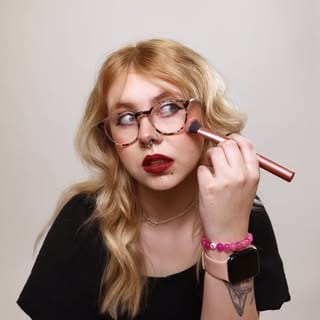
About Saskia Müller | Accessible Beauty
Saskia Müller | Accessible Beauty (@chronically_sask) is a Digital creator creator on Instagram, also filed under Lifestyle and Beauty & Skincare. The account has 5,634 followers and 149 published posts. Recent posts average 82 likes and 4 comments, an engagement rate of 2.23%.
Saskia Müller | Accessible Beauty belongs to the nano tier, the band usually drawn between 1,000 and 10,000 followers. Saskia Müller | Accessible Beauty follows 383 accounts, so the audience is roughly 15 times the size of the list followed. Saskia Müller | Accessible Beauty carries Instagram's verified badge and uses an Instagram professional account. Flinque files Saskia Müller | Accessible Beauty under 5 categories, led by Digital creator and followed by Lifestyle, Beauty & Skincare, Cosmetics and Digital Creator.
The Instagram bio for Saskia Müller | Accessible Beauty runs to 12 words across 4 lines. Emoji sit alongside the words. The latest activity Flinque has on record for Saskia Müller | Accessible Beauty dates from January 2026.
Story Highlights
Unlocking shows the title and cover image of every story highlight this creator keeps pinned to the profile.
149 Posts
Of the 10 most recent posts shown for Saskia Müller | Accessible Beauty, 7 are carousels and 3 are videos. That mix leans toward carousels. 149 published posts give Saskia Müller | Accessible Beauty a moderate archive on Instagram. Against the audience, that is roughly 38 followers for each post published. Saskia Müller | Accessible Beauty also keeps 7 story highlights on the profile. All 10 carry captions, averaging 158 words each. The captions are written mainly in English. Words that recur across them include disabled, because, work, accessibility and it’s. The captions tag #contentcreator, #chronicallyill, #accessiblebeauty, #disabled and #inclusivedesign.
Honestly, 2025 was one of the hardest years of my life, but I learned so much from it. Going into this year I’m going to try and take what I learned and optimise it for the better.
Are there any lessons I learned that you needed to hear?
#NewYears #ContentCreator #Disabled #Trending #CRSELapp
This is SUCH a fun trend!!! I had to jump on it! Exposing the truths <3
Which ones do you relate to!? 👇🏼
#AboutMe #SorryILied #ThingsILove #LikesAndDislikes #ContentCreator
Realistic edition.
Not the “do more, wake up earlier, push harder” kind. The kind that actually works in this body.
More public speaking, even when my voice shakes as I talk.
More creating, less scrolling for permission.
Getting dressed because it helps my brain, not because I should.
Saying YES to opportunities and no to burnout.
Resting before my body forces me to.
Showing up for friendships outside of work and events.
And finally… stopping the comparison spiral that steals my joy.
This year isn’t about becoming someone new, I hate that and don’t believe that’s realistic for anyone to put on themselves. It’s about backing myself properly, with boundaries, care, and belief.
Ambition doesn’t disappear when you’re disabled, it just has to be done differently.
Saving this for the days I forget 🩷
What’s ONE realistic goal you’re taking into the next year? ↓
#DisabledCreator #NewYearNewMe #Disability #BrandConsultant #ChronicallyIll
This nomination reflects my work that sits at the intersection of content, accessibility, and impact. My approach to social media has always been rooted in the belief that digital platforms are not merely tools for visibility, but powerful spaces for education, representation, and systemic change. Through my work as an activist, I aim to challenge industry norms, elevate disabled lived experience as professional expertise, and demonstrate that inclusive content is not a niche, it is a strategic and ethical necessity.
To be recognised by unitaskr among peers who are shaping the future of media, marketing, and creative industries is genuinely meaningful.
Regardless of the outcome, I am so proud of the work that led here and grateful to the communities and collaborators who continue to shape my practice 🥹 Thank you whoever nominated me <3
#Disabled #ChronicallyIll #TrendingContent #DisabledInfluencer #BeautyContentCreator
We’re seeing more brands include disabled people in campaigns, visuals and awareness-month content. That visibility matters. But representation alone is not the same as inclusion.
Tokenisation happens when disability is used to signal progress without changing the systems underneath. When disabled people are visible but not consulted. When accessibility appears briefly and then disappears. When brands speak aboutdisabled communities instead of working with them, and paying them for their expertise.
True accessibility shows up in product development, packaging design, user testing, procurement, comms strategy and long-term planning. It’s measurable, repeatable, and embedded, not performative or seasonal.
This carousel outlines three common red flags brands should be paying attention to. Not as a call-out, but as a call-in. Because inclusive design isn’t about perfection, it’s about accountability, collaboration, and committing to doing better.
#AccessibilityInBusiness #InclusiveDesign #DisabilityInclusion #ExplorePage
For a long time, play was the only place I could tell the truth about myself. Not because I lacked imagination, but because the world offered me so few reflections that felt honest. So I built my own. I borrowed history, stories, and symbols that felt expansive enough to hold me when everyday narratives did not.
Learning that an autistic Barbie is being released feels so radical to me. It acknowledges that autistic children have always been here, creating meaning beyond what was given to them. It also reminds me that the ways we adapt as children are not flaws, but evidence of creativity, resilience, and self-knowledge.
This moment is for the children who deserve to be seen earlier, and for the adults who are finally recognising that their inner child was never “too much” or “out of place”, just underrepresented.
#AutisticRepresentation #DisabilityInclusion #AutisticBarbie #Barbie #AutisticAdults
When accessibility is framed only as a brand obligation, it quietly absolves influencers of accountability. Yet influencers are the ones demonstrating how products are used, who they are designed for, and whose bodies and abilities are considered “default.” If beauty content consistently assumes two steady hands, full dexterity, perfect vision, and unlimited energy, it reinforces exclusion, even when the product itself claims to be inclusive.
Accessible beauty is not just about adaptive packaging or inclusive shade ranges. It is about how products are reviewed, applied, described, and recommended. It is about whether captions include alt text, whether demonstrations acknowledge access needs, whether disabled creators are credited, paid, and positioned as experts rather than exceptions. Influencers are not neutral intermediaries, they are educators, tastemakers, and gatekeepers.
If influencers profit from beauty culture, they also carry responsibility for its impact. Talking about accessibility should not be limited to sponsored posts or awareness days. It should be embedded into everyday content, from tutorials and product reviews to PR decisions and brand partnerships. Accessibility is not a trend, and disabled audiences are not a marketing moment.
When influencers engage seriously with accessible beauty, they expand the industry’s imagination. They challenge narrow definitions of skill, effort, and aesthetics. They normalise assistive tools, alternative application methods, and slower, more sustainable approaches to self-care. In doing so, they make beauty more honest, more human, and more inclusive.
Accessible beauty is not just a brand strategy. It is a cultural responsibility. And influencers are central to whether that culture evolves or remains exclusionary.
#AccessibleBeauty #DisabledCreators #InclusiveBeauty #DisabilityRepresentation #BeautyIndustry
When accessibility is treated as optional, what we’re really saying is that some bodies are expected to adapt, struggle, or go without. That expectation is so normalised that many people don’t notice it until they’re the ones affected, by injury, illness, fatigue, ageing, or circumstance. Access only becomes visible when it’s missing.
Disabled people navigate these gaps every day. Not because our needs are extreme, but because design often assumes unlimited strength, focus, coordination, and energy.
Accessibility challenges that assumption. It asks better questions about who gets to move easily, who gets to participate independently, and who is quietly pushed to the margins.
In consumer industries especially, accessibility is still framed as a niche concern rather than a design responsibility. Yet inclusive, accessible design consistently leads to better usability, broader reach, and more sustainable engagement. When access is built in from the start, it doesn’t dilute a product, it strengthens it.
Accessibility isn’t about anticipating every possible need. It’s about recognising human variation as the norm, not the exception. When we design with that reality in mind, we don’t just create access, we create systems that work.
#AccessibleBeauty #InclusiveDesign #DisabilityAdvocacy #AccessibleLiving #BeautyReformed
Disabled people have skin. Hair. Bodies that need washing, moisturising, protecting. Disabled people go to work, go on dates, exist in public, and exist privately. We have routines. We have preferences. We have identities. None of that disappears because our hands shake, our joints dislocate, our grip is weak, our energy is limited, our coordination fluctuates, or our nervous systems process the world differently.
What’s often missing from this conversation is an understanding of what disability actually looks like in practice. For many people, the barrier isn’t a lack of interest in makeup or body care, it’s packaging that requires force, precision, or pain. It’s slippery bottles in wet hands. It’s tiny caps, stiff pumps, heavy glass, aggressive textures, strong fragrances, and instructions that assume perfect vision, strength, and coordination. These aren’t minor inconveniences. They are the difference between independence and needing help.
When a product is inaccessible, it tells us this wasn’t made with us in mind. Not because we don’t want it, but because we weren’t considered important enough to design for. And over time, that exclusion gets internalised. People stop trying. They stop buying. They stop participating. Not because they don’t care, but because the cost of caring becomes too high.
I think people struggle with the idea of accessible beauty because they still see beauty as frivolous. As something optional. As something disabled people should be grateful to go without. But self-care is not frivolous when it’s tied to dignity, autonomy, confidence, sensory comfort, and mental health. Being able to apply your own skincare without pain. Being able to open your own products. Being able to choose how you present yourself to the world, these things matter.
#ExplorePage #AccessibleBeauty #ChronicallyIll #DisabledBeauty #Explore
Saskia Müller | Accessible Beauty's engagement
Saskia Müller | Accessible Beauty's engagement rate on Instagram is 2.23%, between 1% and 3%, or 1 to 3 likes and comments per 100 followers. On a typical post that comes to about 1 like or comment for every 45 followers. An average post collects 82 likes and 4 comments, close to 21 likes for each comment.
Engagement rate
2.23%
- Avg likes
- 82
- Avg comments
- 4
- Interactions : followers
- 1 : 45
Lookalike Creators
A free account lists creators whose audiences behave like this one, ready to shortlist and compare side by side.
Age & Gender
Unlocking shows how this audience splits across age bands and gender, charted from follower data.
Audience Location
Unlocking reveals the countries and cities where the most active followers of this account are concentrated.
Primary Language
Unlocking shows the languages this audience uses most in comments, interactions and the content it consumes.
Audience Interests
Unlocking lists the topics and categories this audience follows and engages with most often across the platform.
Authenticity
Unlocking scores how genuine the audience is, flagging fake, inactive or bot followers found in engagement patterns.
Audience Quality Score
Unlocking gives one overall audience quality score combining authenticity, engagement, follower activity and audience relevance.
Brand Affinity
Unlocking names the brands this audience already follows, mentions or engages with across social platforms.
Content Strategy
Unlocking breaks down the content pillars, tone and visual style this creator uses, and which formats perform best.
Commercial Insights
Unlocking shows collaboration types, an estimated pricing tier and a brand safety risk read for sponsored campaigns.
Industry Fit
Unlocking rates how well this creator and audience align with specific industry verticals and brand categories.
Research Saskia Müller | Accessible Beauty further
Flinque ranks Instagram creators in Digital creator, Lifestyle and Beauty & Skincare, categories Saskia Müller | Accessible Beauty is filed under, and its free tools measure the same figures for any public account.
Related rankings
Frequently asked questions
These answers about Saskia Müller | Accessible Beauty are generated from the Instagram profile data Flinque holds for the account.
Who is Saskia Müller | Accessible Beauty?
Saskia Müller | Accessible Beauty (@chronically_sask) is a Digital creator creator on Instagram, also filed under Lifestyle and Beauty & Skincare. Saskia Müller | Accessible Beauty carries Instagram's verified badge and uses an Instagram professional account. The Instagram bio for Saskia Müller | Accessible Beauty runs to 12 words across 4 lines.
How many followers does Saskia Müller | Accessible Beauty have?
Saskia Müller | Accessible Beauty has 5,634 followers on Instagram (5.6K). Saskia Müller | Accessible Beauty follows 383 accounts, so the audience is roughly 15 times the size of the list followed. 149 published posts give Saskia Müller | Accessible Beauty a moderate archive on Instagram.
What is Saskia Müller | Accessible Beauty's engagement rate?
Saskia Müller | Accessible Beauty's engagement rate on Instagram is 2.23%, between 1% and 3%, or 1 to 3 likes and comments per 100 followers. On a typical post that comes to about 1 like or comment for every 45 followers. An average post collects 82 likes and 4 comments, close to 21 likes for each comment.
What does Saskia Müller | Accessible Beauty post about on Instagram?
Flinque files Saskia Müller | Accessible Beauty under 5 categories, led by Digital creator and followed by Lifestyle, Beauty & Skincare, Cosmetics and Digital Creator. Of the 10 most recent posts shown for Saskia Müller | Accessible Beauty, 7 are carousels and 3 are videos. The 10 recent Instagram captions Flinque holds for Saskia Müller | Accessible Beauty repeatedly use the words disabled, because, work, accessibility and it’s. Saskia Müller | Accessible Beauty's captions carry hashtags such as #contentcreator, #chronicallyill and #accessiblebeauty. Saskia Müller | Accessible Beauty writes those captions mainly in English. Saskia Müller | Accessible Beauty keeps 7 story highlights, which open with a free Flinque account.
How do I contact Saskia Müller | Accessible Beauty for a collaboration?
Saskia Müller | Accessible Beauty's contact details are not published on Flinque's public profile. The Instagram bio links to 1 external site, and a free Flinque account opens that link. Brands with a free Flinque account can shortlist Saskia Müller | Accessible Beauty and use Flinque's outreach tools wherever a contact route is on file.
Links
Saskia Müller | Accessible Beauty's own Instagram profile is the one outbound link Flinque publishes for the account, and the bio link opens after signing up.
Public profile data sourced from Instagram. Flinque is not affiliated with Saskia Müller | Accessible Beauty.