- Following 2.2K
- Followers 37.4K
- Engagement 4.79%
- Avg likes 1.8K
- Avg comments 17
About K. Hayashi
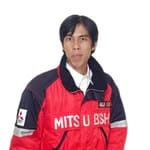
K. Hayashi (@captbradford) is a Digital creator creator on Instagram, also filed under Travel and Culture. The account has 37,364 followers and 982 published posts. Recent posts average 1,839 likes and 17 comments, an engagement rate of 4.79%.
With 37.4K followers, K. Hayashi is a micro creator by the common 10,000 to 100,000 definition. K. Hayashi follows 2,156 accounts, so the audience is roughly 17 times the size of the list followed. K. Hayashi uses an Instagram professional account. Flinque files K. Hayashi under 3 categories, led by Digital creator and followed by Travel and Culture.
The Instagram bio for K. Hayashi runs to 22 words across 5 lines. The latest activity Flinque has on record for K. Hayashi dates from September 2026.
Story Highlights
Unlocking shows the title and cover image of every story highlight this creator keeps pinned to the profile.
982 Posts
Of the 10 most recent posts shown for K. Hayashi, 9 are carousels and 1 is a video. That mix leans toward carousels. K. Hayashi has built a substantial archive of 982 posts. Against the audience, that is roughly 38 followers for each post published. K. Hayashi also keeps 10 story highlights on the profile. All 10 carry captions, averaging 279 words each. The captions are written mainly in English. Words that recur across them include first, engine, cars, would and which. The captions tag #wrc, #rally, #jdm, #mazda and #rotary.
All that power in such a tiny footprint is fed through a mechanical front limited-slip differential via a 6-speed sequential transmission. The cabin is stripped down to the bare essentials with the rear completely gutted and equipped with a Motec display with sequential shifter setup sitting next to the steering column.
Planted on a MacPherson strut front and 3-link rear suspension, the tarmac setup fills out those blistered arches perfectly with 17x7.0J wheels. Combine that with the integrated rear wing and this compact 3,770mm-long chassis becomes a masterclass in functional weaponry. #suzuki#suzukiswift#suzukiignis#wrc#rally
The Gontazaka Z, officially entered on JAF records as the 覇舞権太坂280Z is such an enduring piece of Japanese racing folklore. Yoshio Nagata ran his racing program out of the very same Esso service station where he sold fuel. His pit crew wasn’t a squad of fly-in factory engineers, it was made up of his everyday petrol station mechanics and the staff from his local pub. Together, they took an aging S30 chassis, widened its stance with very Kaido racer like (truly a car that would not look out of place when the series it raced in put a boost in the movement) fiberglass box fenders and painted it in the black-and-yellow livery of Suntory’s Biomin X energy drink. #fairladyz#s30#supersilhouette#jdm#group5
What made the car so remarkable was its total refusal to give up on natural aspiration during the expanding new age of racing turbochargers in wider used motorsports. While the turbo fields LZ20B turbo engines were putting out well over 500 horsepower, Nagata kept evolving his faithful L-series straight-six. He bored the original 2.6-liter engine out to 2,870 cc, slapped on triple Weber carburetors and fitted a very rare and sort after works-developed LY28 crossflow cylinder head to give the old chassis a fighting chance. Breathing through that crossflow head, the naturally aspirated setup pushed out a reported 280 horsepower. Combined with an aggressively lightened vehicle weight of roughly 860 to 890 kg and 15-inch wheels wrapped in Dunlo
This article relates the incredible story in brief. While the chief engineer Kenichi Yamamoto and his team strived hard to make this a reality, actually it would not have happened if it hadn't been for the dream and efforts of Mazda second president Tsuneji Matsuda, a man with an extremely determined but kind personality who believed in the technology and the future of the rotary engine use that would make Mazda unique.
This classic car is not as often talked about as the Nissan Fairlady Z, Hakosuka GT-R or Toyota 2000 GT, but in my opinion it is up there with the most important of the 60s cars that revolutionized not only Japanese automobiles but the world.
So please enjoy the article.
#mazda
#rotary
#reengine
#cosmosport
#jdm
The point is that, the AE86 being the last soldier to use an archaic FR platform at the time for D segment cars (Corolla / Civic class) when rivals had already switched to the more practical FF platform supposedly had a variety of reasons which I presented in today's article.
But what would interest everyone is how the cars were evaluated at the time against the rivals in the same category and what is probably now an obsolete term "Boy Racers" which is the first part of today's post.
The second explains comprehensively all of the different grades available at the time for connoisseurs. And the last part of some very interesting little known facts.
#ae86
#initiald
#4age
#trueno
#levin
A car that would introduce the world of rallying to some very big names, Richard Burns, Colin McRae and Possum Bourne and establish the EJ20 as quite the capable heart of a rally car. #subaru#legacyrs#ej20#wrc#rally
The very heartbeat of this machine was of course the EJ20 engine. It was born from a covert rebellion though like all good things in the car industry are. Subaru’s corporate management was dead-set against investing the 40 billion yen required to completely change their engine production lines, especially since a new engine had only recently debuted. But a group of renegade engineers knew they couldn’t just stand by and watch their rivals pull away. They launched the EJ20 project in total secrecy, eventually winning over then-president Toshihiro Tajima, who dreamed of transforming Subaru into the BMW of Japan (something very interesting as BMW would copy the thought process to create everyone’s favourite clown shoe to become the Subaru of Europe)
The old OHC engines from the Leone just weren’t going to cut it against the world’s best. They were plagued by convoluted port shapes, restrictive head bolt placements and glass-fiber timing belts that had a terrifying habit of snapping under stress. The engineering team knew they had to build a block that pushed out one and a half to two times the power of the old engines. They rigorously tested both three-bearing and five-bearing crankshafts, finally settling on the five-bearing layout to dial out case distortion and keep the bottom end rigid. To breathe life into the new turbocharged EJ20, the team opted for a top-mounted, water-cooled intercooler. While water-cooling was brilliant for keeping intake temperatures perfectly stable under the punishing, low-speed conditions of rally stages, it added undeniable weight to the nose of the car. The engineers actually wanted to run a lighter air-cooled system, but strict internal visibility requirements dictated that a massive hood scoop couldn’t be use
As promised. This next post is about Mazda. And I searched deep into the material I had and dug up for interesting Mazda rotary engine builds. All of them from the mid-90s. It was a time before over the top exterior designs and gaudy fashion took over the car tuning and styles of recent years. Especially the first article taken from Carboy featuring Pan Speed's high power top speed 700 PS triple 20B rotor attempting a run at the former Yatabe JARI test course. The article describes the difficulty of driving such a kind of high-powered car. But this was the time when many tuners were aiming for top speeds as you probably know for marketing of their tuning services.
There are two other quite extreme tuning in the form of the luxury Eunos Cosmo, a car that we hardly see anymore and I thought this would be interesting to check it out. But also observe the first Savannah RX-7 SA22C with a twin turbo setup looking like a silhouette racer.
Last but not least is the quite legendary full complete car from The works tuner Mazdaspeed. The A-SPEC. This was a fresh review when the kit came out. The writer also highlights some specific flaws of the FD3S and he's feelings about the car and wish how Mazda would improve the cooling which they of course did later in the Type 5.
#mazda
#rx7
#rotary
#eunoscosmo
#fd3s
When the NSX range was upgraded to the 3.2 l engine and the facelift in 2001, the Type R was revised again posting newer technology in the aerodynamics the use of carbon fiber body parts. Also first for production Japanese car. The special article taken from 2002 J's Tipo brings I never seen before behind the scenes in depth interview on the background of development of the 2002 NSX-R. I translate it in a rewritten parts and edit technical information for the most nerdy of you guys from the official Factbook. Take note of the two last pages special article from the original NSX Press catalog talking about the titanium conrods.
#honda
#nsx
#vtec
#f1
#senna
This is a special article in two parts. The first is another legendary racing driver whom you know from watching Best Motoring, in 1999 Akihiko Nakaya have a chance to test drive the development Lancer Evolution 6 Group A in Monte Carlo tarmac spec and he gives his detailed impressions in this translated article recounting the experience written in 2001 at the launch of the Lancer Evolution VII. He compares how they Evo VII ACD and AYC technology was streamed down from WRC. But also precisely the differences in handling and setup of a Group A car. You can even find the video on YouTube.
The next part is a three-page never told before story of behind the scenes of how Tommi Mäkinen and Mitsubishi engineers struggle and work together. The account is a combination of the excepts of the late Iwao Kimata the general manager from Japan that not only oversaw the operations but connected the engineers and drivers. Someone you may have never heard of but was key and essential alongside the late Andrew Cowan in running MRE. My own time in Mitsubishi working in WRC it's also input with whatever I remember, and written from the point of view of the team.
Enjoy the story if you are a real WRC 90s fan.
#mitsubishilancerevolution
#lancerevo
#tommimakinen
#ralliart
#4g63
TRD is famous as the Toyota works Motorsport division for many legendary racing cars like the JGTC GT500 Supra, N2 AE86 amongt others. Today in Japan the brand has completely disappeared from the tuning parts menu, making many fans wonder if the company has dissolved. However in fact, TRD which in the first place is actually a brand of a company called Toyota Technocraft and a department inside this company which is responsible for building racing cars and parts was reorganized today into Toyota Customising & Development with Modellista. They are the ones that make GR parts for GR cars.
It is also the oldest of the Japanese manufacturer works teams.
Fans of JDM and Toyota will enjoy the in-depth articles that looks behind the scenes and if philosophy of TRD in these articles. There is also a two-page map explaining the relation between other Toyota subsidiaries. And a feature on their iconic complete cars as well as a thorough history up to 2015 before Toyota switch over completely to Toyota Gazoo Racing.
Enjoy this one.
Cover design by
#toyota #trd #toyotaracingdevelopment #トヨタ #トヨタテクノクラフト
K. Hayashi's engagement
K. Hayashi's engagement rate on Instagram is 4.79%, between 3% and 6%, or 3 to 6 likes and comments per 100 followers. On a typical post that comes to about 1 like or comment for every 21 followers. Likes outnumber comments by roughly 108 to 1, with 1,839 likes and 17 comments on an average post, so most reactions are taps rather than replies.
Engagement rate
4.79%
- Avg likes
- 1.8K
- Avg comments
- 17
- Interactions : followers
- 1 : 21
Lookalike Creators
A free account lists creators whose audiences behave like this one, ready to shortlist and compare side by side.
Age & Gender
Unlocking shows how this audience splits across age bands and gender, charted from follower data.
Audience Location
Unlocking reveals the countries and cities where the most active followers of this account are concentrated.
Primary Language
Unlocking shows the languages this audience uses most in comments, interactions and the content it consumes.
Audience Interests
Unlocking lists the topics and categories this audience follows and engages with most often across the platform.
Authenticity
Unlocking scores how genuine the audience is, flagging fake, inactive or bot followers found in engagement patterns.
Audience Quality Score
Unlocking gives one overall audience quality score combining authenticity, engagement, follower activity and audience relevance.
Brand Affinity
Unlocking names the brands this audience already follows, mentions or engages with across social platforms.
Content Strategy
Unlocking breaks down the content pillars, tone and visual style this creator uses, and which formats perform best.
Commercial Insights
Unlocking shows collaboration types, an estimated pricing tier and a brand safety risk read for sponsored campaigns.
Industry Fit
Unlocking rates how well this creator and audience align with specific industry verticals and brand categories.
Research K. Hayashi further
Flinque ranks Instagram creators in Digital creator and Travel, categories K. Hayashi is filed under, and its free tools measure the same figures for any public account.
Related rankings
Frequently asked questions
These answers about K. Hayashi are generated from the Instagram profile data Flinque holds for the account.
Who is K. Hayashi?
K. Hayashi (@captbradford) is a Digital creator creator on Instagram, also filed under Travel and Culture. K. Hayashi uses an Instagram professional account. The Instagram bio for K. Hayashi runs to 22 words across 5 lines.
How many followers does K. Hayashi have?
K. Hayashi has 37,364 followers on Instagram (37.4K). K. Hayashi follows 2,156 accounts, so the audience is roughly 17 times the size of the list followed. K. Hayashi has built a substantial archive of 982 posts.
What is K. Hayashi's engagement rate?
K. Hayashi's engagement rate on Instagram is 4.79%, between 3% and 6%, or 3 to 6 likes and comments per 100 followers. On a typical post that comes to about 1 like or comment for every 21 followers. Likes outnumber comments by roughly 108 to 1, with 1,839 likes and 17 comments on an average post, so most reactions are taps rather than replies.
What does K. Hayashi post about on Instagram?
Flinque files K. Hayashi under 3 categories, led by Digital creator and followed by Travel and Culture. Of the 10 most recent posts shown for K. Hayashi, 9 are carousels and 1 is a video. The 10 recent Instagram captions Flinque holds for K. Hayashi repeatedly use the words first, engine, cars, would and which. K. Hayashi's captions carry hashtags such as #wrc, #rally and #jdm. K. Hayashi writes those captions mainly in English. K. Hayashi keeps 10 story highlights, which open with a free Flinque account.
How do I contact K. Hayashi for a collaboration?
K. Hayashi's contact details are not published on Flinque's public profile. The Instagram bio links to 1 external site, and a free Flinque account opens that link. Brands with a free Flinque account can shortlist K. Hayashi and use Flinque's outreach tools wherever a contact route is on file.
Links
K. Hayashi's own Instagram profile is the one outbound link Flinque publishes for the account, and the bio link opens after signing up.
Public profile data sourced from Instagram. Flinque is not affiliated with K. Hayashi.