- Following 838
- Followers 24.6K
- Engagement 1.51%
- Avg likes 411
- Avg comments 32
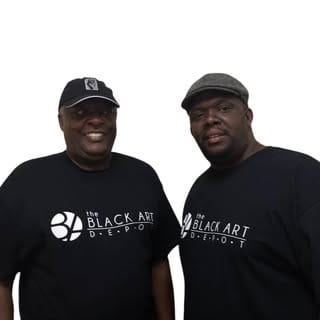
About The Black Art Depot
The Black Art Depot (@blackartdepot) is a Shopping & retail creator on Instagram, also filed under eCommerce/DTC and Shopping & Retail. The account has 24,607 followers and 3,362 published posts. Recent posts average 411 likes and 32 comments, an engagement rate of 1.51%.
With 24.6K followers, The Black Art Depot is a micro creator by the common 10,000 to 100,000 definition. Set against 838 accounts followed, the audience works out to about 29 followers per account The Black Art Depot follows. The Black Art Depot is set up as an Instagram business account. Flinque files The Black Art Depot under 3 categories, led by Shopping & retail and followed by eCommerce/DTC and Shopping & Retail.
The Instagram bio for The Black Art Depot runs to 19 words. The bio tags #blackart, #blackhistory, #africandecor and #africanfashion. The latest activity Flinque has on record for The Black Art Depot dates from January 2026.
Story Highlights
Unlocking shows the title and cover image of every story highlight this creator keeps pinned to the profile.
3,362 Posts
Of the 10 most recent posts shown for The Black Art Depot, 6 are single images and 4 are carousels. That mix leans toward single images. With 3,362 posts published, The Black Art Depot's archive runs well past the 2,000 mark. Against the audience, that is roughly 7.3 followers for each post published. The Black Art Depot also keeps 12 story highlights on the profile. All 10 carry captions, averaging 275 words each. The captions are written mainly in English. Words that recur across them include through, become, every, african and were. The captions tag #blackartists, #blackhistory, #blackart, #afrocentric and #adinkra.
"Divine Spirit," by acclaimed artist Larry "Poncho" Brown, captures a contemplative figure adorned in traditional West African dress, viewed from an elevated perspective that invites viewers into an intimate moment of spiritual connection. It serves as a powerful meditation on spiritual freedom and divine alignment.
The figure's garment features the Adinkra symbol Gye Nyame (meaning "except for God"), one of the most recognizable and profound symbols from Ghana's Akan people. This symbol represents the supremacy of God and the understanding that all things exist because of divine presence, a visual reminder of faith's central role in daily life. Each golden symbol adorning the turquoise fabric becomes a meditation on the eternal nature of the divine and humanity's connection to something greater than ourselves.
Cowrie shells delicately accent the composition, honoring their sacred significance across African cultures. Historically used as currency throughout West and Central Africa, cowrie shells represented wealth, fertility, and spiritual protection. In many African spiritual practices, these shells served as divination tools and symbols of feminine power, connecting the earthly realm with ancestral wisdom. Brown's inclusion of these shells reinforces the artwork's themes of spiritual abundance and divine guidance.
The artist's bird's-eye perspective creates an intimate viewing experience, as though we're witnessing a private moment of prayer or meditation. The flowing curves of the figure's posture suggest both surrender and strength, the balance required when moving in tune with divine guidance. Surrounding waves of purple, gold, and silver create a rhythmic energy that mirrors the spiritual vibrations of someone aligned with their higher purpose. #afrocentric #adinkra #blackartists
The composition centers on a determined figure in forward motion, fist raised high in timeless declaration. But Morrison's genius lies in what fills this silhouette, a rich tapestry of imagery representing the Black experience across generations. Within the figure's form, you'll discover children at play, fragments of history, cultural symbols, and text that weaves through the composition like a visual narrative.
The bold "I AM" flag becomes both proclamation and beacon, while the base inscription "A Never Ending Story" reminds us that this journey of self-definition continues through every generation.
Morrison's layered approach creates a piece that rewards extended viewing. Each element within the figure tells part of a larger story about heritage, resistance, joy, struggle, and triumph. The vibrant color palette, blues, reds, golds, and earth tones, pulses with energy while maintaining sophisticated artistic balance.
Contemporary artist Frank Morrison, celebrated for his vibrant depictions of African American life and culture, ventures into new artistic territory with "I Am." This piece represents a significant evolution in Morrison's creative journey, combining his masterful figurative work with layered storytelling that speaks to the complexity of Black identity in America. #authenticitymatters #beyourself #blackartists
Gerald Ivey knows this. His brush doesn't whisper, it speaks plain truth in bold strokes and unapologetic color. He paints the way family actually is: complex, layered, all our different shades pressed together, sometimes at angles, always somehow fitting.
The holidays give us permission to do what we should do anyway: sit down together, break bread, tell the old stories, and make new ones. To argue about nothing and everything. To forgive without saying so. To remember that blood is just the beginning, but love is the work.
Ivey's figures lean into each other the way we do when we stop pretending we don't need each other. They occupy space boldly, refusing to apologize for taking up room, for being vibrant, for being here. That's family, demanding to be seen, insisting on being heard, making sure nobody gets left out of the frame.
This season, make it a family affair. Not the Hallmark version, but the real thing, messy and magnificent, ordinary and extraordinary, exactly as imperfect as it needs to be.
Because family is the art of showing up. Of staying. Of weaving our separate colors into something nobody could create alone. #familytime #familytraditions #blackartist
Artist Michelle Browder spent decades haunted by a painting of these three terrified girls in an examination room. Now three towering figures rise in Montgomery: Anarcha at 15 feet, Betsey at 12, Lucy at 9, to memorialize them.
Unveiled in September 2021 at the More Up Campus, Browder's monument transforms discarded metal into dignity. Bicycle chains become Lucy's Bantu knots. Chandelier pieces, candlesticks, and shovels form the sculptures. A speculum, the tool Sims developed through their suffering, crowns Betsey. Anarcha stands with a hole where her womb should be; sculptor Deborah Shedrick created that womb separately, filled with needles and instruments. People nationwide donated discarded objects. Browder learned to weld specifically to honor these women, under the tutelage of San Francisco artist Dana Albany and other skilled metalworkers.
The figures stand armless and footless to represent that these enslaved women could not walk away. They endured years of repeated surgeries without anesthesia, experiments that Sims justified by claiming Black people felt less pain than other races.
Dr. Sims pioneered modern gynecology, and today the tools gynecologists use are the result of experiments on Anarcha, Betsey, and Lucy. 33 South Perry Street, where this research took place, was acquired by Browder and transformed into a clinic where Black women receive dignified care.
A statue stands at the Alabama Capitol honoring Sims' achievements and milestones. One mile away, Browder's sculptures stand. She made them tower over the landscape, ensuring "never again would anyone look down on these women". #gynecology #montgomery #blackhistory365 #medicalhistory
Weitzman depicts Johns mid-speech on April 23, 1951, her clenched left fist showing the intensity of her message. Her right hand grips a tattered textbook titled "The History of Virginia", the worn-out, hand-me-down materials Black students received while other students across town studied in heated brick buildings with new supplies. At her feet, beneath the wooden floor of the statue's base, Weitzman embedded replicas of books Johns never had access to: works by Frederick Douglass, Zora Neale Hurston, W.E.B. Du Bois, Langston Hughes, and other African American scholars whose voices were systematically excluded from segregated schools.
"We wanted so much here and had so little, and we had talents and abilities here that weren't being realized," Johns reflected decades later. "There wasn't any fear. I just felt that this is your moment, seize it."
That clarity of purpose guided Maryland sculptor Steven Weitzman as he created the bronze monument unveiled on December 16 in the U.S. Capitol's Emancipation Hall. Virginia selected Johns as one of two statues to represent the commonwealth in the National Statuary Hall Collection, which honors notable figures from each state's history. The statue rises over 10 feet tall, cast at Laran Bronze in Pennsylvania and mounted on a granite pedestal. Working closely with Johns' sister, Joan Johns Cobbs, and family members, Weitzman spent years refining details, since few photographs of Barbara exist. Her focused expression captures that fearless determination.
Johns is now the only teenager depicted in the Capitol's statuary collection. #sculpture #virgínia #monument #blackhistory
The torch gets passed not in grand ceremonies but in quiet moments. In lessons that feel like conversations. In standards that feel like love. In expectations that feel like belief. Someone once knelt down to your level and told you who you could become, and now you stand tall enough to do the same.
This is how legacies are built, not in what we accomplish for ourselves, but in what we make possible for those who come after. Not in the crowns we wear, but in the ones we place on smaller heads, even when they're still too big to fit quite right.
You are the bridge between what was and what will be. The link that refuses to break. The hand that steadies when the path gets uncertain. The voice that says "you can" when the world whispers "you can't."
Your father prepared you for this moment. Now you prepare someone else for theirs. The crown may be heavy, but you don't carry it alone, you carry it forward.
One day, they'll be king. Today, you show them how. #FatherhoodJourney #fatherandson #blackart
Navy Admiral Alvin Holsey, one of only two Black four-star officers commanding a U.S. combatant command, retires this Friday, December 12. According to reports, he came under pressure to step down after raising concerns about military operations he believed lacked clear legal authority.
According to The Wall Street Journal, Defense Secretary Pete Hegseth reportedly told Admiral Holsey to "move out fast and don't ask questions" regarding strikes against boats in the Caribbean. When Holsey raised concerns about the legal grounding for these operations, particularly regarding follow-up strikes, tensions escalated.
Sources say Holsey offered to resign at an October meeting. His retirement was announced days later, cutting short what is typically a three-year command after just one year.
This is what principled leadership looks like, standing on values, not yielding to pressure.
Who is Admiral Alvin Holsey? A son of Fort Valley, Georgia, and a 1988 graduate of Morehouse College with a degree in Computer Science. A brother of Omega Psi Phi. A Navy helicopter pilot who built 37 years of distinguished service marked by historic firsts. He commanded the Navy's first hybrid electric propulsion warship, the USS Makin Island. He led Carrier Strike Group One. He served as the inaugural commander of the International Maritime Security Construct. In 2020, he was handpicked to lead Task Force One Navy, analyzing military readiness issues. Admiral Holsey has, for decades, proven his capability, excellence, and leadership.
We honor Admiral Holsey for his service, his accomplishments, and his integrity. In a time when speaking up can cost you your career, he chose principle over position.
Thank you, Admiral Holsey. You represent what military leadership should be. #navylife⚓️ #MilitaryAppreciation #LeadershipInAction
Ghanaian artist Seth Alifo captures this truth in "Intimacy," a work that speaks to the most essential quality of connection, Love. Love brings people together and creates an entirely new entity from their union.
Working in his signature technique, "Afro-Eccentric Waves," Alifo employs intricate, transparent lines and shapes in circular form, layering them with bold, sweeping gestures that mirror the complexity of human connection itself.
His approach is masterful in its controlled chaos. Vibrant yellows and warm golds crown the composition like shared joy. At the same time, deep blues create atmospheric depth, the vast emotional landscape lovers navigate together.
Brilliant reds pulse through the center, suggesting passion's heartbeat. At the same time, those distinctive circular waves weave through the color fields like the thousand small moments that bind two lives into one story.
Alifo doesn't paint bodies; he paints the space between them, the energy that transforms "you" and "me" into "us." His abstract approach honors intimacy's essential mystery: how two distinct beings can stand together yet become indistinguishable, maintaining individual identity while creating something that transcends both.
This is intimacy as alchemy, rendered in paint, two forms dissolving into radiant possibility, proving that the closest we come to magic is in the arms of those who truly see us. #intimacy #blackart #africanart
Phase 2's letterforms, what he called "softies", were unlike anything the city had seen. Earlier tags were sharp and angular; his letters seemed to float off the metal, soft and alive. He pioneered the use of arrows and loops that would become standard vocabulary for every writer who followed.
Phase 2 saw graffiti as urban teenagers claiming space in a city that refused to see them. By 1972, he joined United Graffiti Artists. In September 1973, his work appeared at the Razor Gallery in SoHo, the first gallery exhibition of subway art.
His influence extended beyond train cars. When hip-hop was still finding its name, Phase 2 approached Grandmaster Flash's manager with an idea. He wanted to create flyers to promote their jams. At the time, no one from the culture was creating marketing materials. Phase 2 saw the gap and filled it, designing promotional art for Flash, Afrika Bambaataa, and the legendary Roxy nightclub shows that introduced hip-hop to downtown Manhattan. His flyers gave the emerging hip hop culture its visual identity.
Phase 2 was a true b-boy, mastering every element: DJ-ing, dancing, MCing, and designing. He created logos for record labels, performed live painting onstage, and released rap singles.
His pieces eventually appeared in galleries worldwide, from Amsterdam to Miami.
When Lonny Wood passed away in December 2019, hip-hop lost one of its founding architects. Lord Finesse, who grew up next door to him in Forest Houses, remembered discovering years later that his quiet neighbor was a legend.
"We always got a good laugh about where art had taken both of us," he wrote.
Phase 2's legacy lives in every bubble letter you see, every hip-hop flyer, every piece that treats the letter as art rather than just communication. He gave hip-hop its visual voice. #hiphopmusic #hiphopculture #graffitiart #arthistory
This is the story they're trying to erase.
Winter 1944. While Nazi forces retreated across Europe, 260 Black soldiers from the 960th Quartermaster Service Company arrived in Margraten, Netherlands, with pickaxes and shovels, not to fight, but to bury the dead.
Nineteen-year-old First Sergeant Jefferson Wiggins led men who dug graves by hand through freezing rain and mud. They buried over 20,000 American soldiers in what would become the Netherlands American Cemetery. Wiggins later recalled watching his men cry as they lowered bodies into the ground. The crushing irony haunted them: "We had to bury those soldiers although we couldn't sit in the same room with them when they were alive."
For 65 years, Wiggins kept this trauma buried. Not until 2009 did Dutch historian Mieke Kirkels uncover the story of the 960th and find Wiggins, the last surviving member. His testimony, along with the stories of 174 Black Americans buried at Margraten, including Medal of Honor recipient Willy F. James Jr. and hero George H. Pruitt, who drowned trying to save a fellow soldier, finally received recognition in 2024.
Then this past March, the American Battle Monuments Commission removed those panels. Wiggins' widow wasn't informed. Dutch officials weren't notified. The removal followed inquiries by the Heritage Foundation into ABMC's compliance with anti-DEI executive orders.
Now, Dutch citizens are fighting back. Mayors, provincial councils, and historians demand the return of the panels, calling their removal "indecent and unacceptable." Families in the Netherlands have adopted every grave at Margraten since 1946. They refuse to let history disappear.
The battle to preserve Black military history extends beyond our borders, and the Dutch are showing us that some stories are too important to erase. #WorldWarII #militaryhistory #blackhistory
The Black Art Depot's engagement
The Black Art Depot's engagement rate on Instagram is 1.51%, between 1% and 3%, or 1 to 3 likes and comments per 100 followers. On a typical post that comes to about 1 like or comment for every 66 followers. An average post collects 411 likes and 32 comments, close to 13 likes for each comment.
Engagement rate
1.51%
- Avg likes
- 411
- Avg comments
- 32
- Interactions : followers
- 1 : 66
Lookalike Creators
A free account lists creators whose audiences behave like this one, ready to shortlist and compare side by side.
Age & Gender
Unlocking shows how this audience splits across age bands and gender, charted from follower data.
Audience Location
Unlocking reveals the countries and cities where the most active followers of this account are concentrated.
Primary Language
Unlocking shows the languages this audience uses most in comments, interactions and the content it consumes.
Audience Interests
Unlocking lists the topics and categories this audience follows and engages with most often across the platform.
Authenticity
Unlocking scores how genuine the audience is, flagging fake, inactive or bot followers found in engagement patterns.
Audience Quality Score
Unlocking gives one overall audience quality score combining authenticity, engagement, follower activity and audience relevance.
Brand Affinity
Unlocking names the brands this audience already follows, mentions or engages with across social platforms.
Content Strategy
Unlocking breaks down the content pillars, tone and visual style this creator uses, and which formats perform best.
Commercial Insights
Unlocking shows collaboration types, an estimated pricing tier and a brand safety risk read for sponsored campaigns.
Industry Fit
Unlocking rates how well this creator and audience align with specific industry verticals and brand categories.
Research The Black Art Depot further
Flinque ranks Instagram creators in Shopping & retail and eCommerce/DTC, categories The Black Art Depot is filed under, and its free tools measure the same figures for any public account.
Frequently asked questions
These answers about The Black Art Depot are generated from the Instagram profile data Flinque holds for the account.
Who is The Black Art Depot?
The Black Art Depot (@blackartdepot) is a Shopping & retail creator on Instagram, also filed under eCommerce/DTC and Shopping & Retail. The Black Art Depot is set up as an Instagram business account. The Instagram bio for The Black Art Depot runs to 19 words.
How many followers does The Black Art Depot have?
The Black Art Depot has 24,607 followers on Instagram (24.6K). Set against 838 accounts followed, the audience works out to about 29 followers per account The Black Art Depot follows. With 3,362 posts published, The Black Art Depot's archive runs well past the 2,000 mark.
What is The Black Art Depot's engagement rate?
The Black Art Depot's engagement rate on Instagram is 1.51%, between 1% and 3%, or 1 to 3 likes and comments per 100 followers. On a typical post that comes to about 1 like or comment for every 66 followers. An average post collects 411 likes and 32 comments, close to 13 likes for each comment.
What does The Black Art Depot post about on Instagram?
Flinque files The Black Art Depot under 3 categories, led by Shopping & retail and followed by eCommerce/DTC and Shopping & Retail. Of the 10 most recent posts shown for The Black Art Depot, 6 are single images and 4 are carousels. The 10 recent Instagram captions Flinque holds for The Black Art Depot repeatedly use the words through, become, every, african and were. The Black Art Depot's captions carry hashtags such as #blackartists, #blackhistory and #blackart. The Black Art Depot writes those captions mainly in English. The bio tags #blackart, #blackhistory, #africandecor and #africanfashion. The Black Art Depot keeps 12 story highlights, which open with a free Flinque account.
How do I contact The Black Art Depot for a collaboration?
The Black Art Depot's contact details are not published on Flinque's public profile. The Instagram bio links to 1 external site, and a free Flinque account opens that link. The account is registered as an Instagram business account. Brands with a free Flinque account can shortlist The Black Art Depot and use Flinque's outreach tools wherever a contact route is on file.
Links
The Black Art Depot's own Instagram profile is the one outbound link Flinque publishes for the account, and the bio link opens after signing up.
Public profile data sourced from Instagram. Flinque is not affiliated with The Black Art Depot.